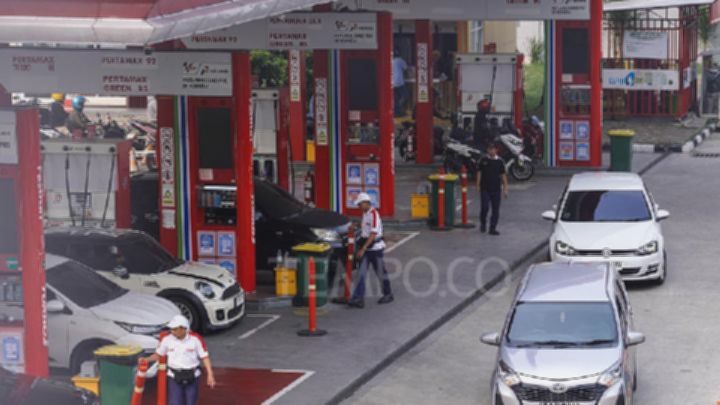

The Indonesian Coordinating Minister for Economic Affairs, Airlangga Hartarto, has announced the positive outcomes of the government’s Work From Home (WFH) policy. Implemented since early April 2026, the regulation is credited with effectively curbing fuel consumption, particularly for Pertalite, a subsidized gasoline variant.
Minister Hartarto revealed these encouraging findings following a coordination meeting held at his office on Tuesday, May 26, 2026. “We evaluated the Work From Home policy over the past two months, and the results are quite good. There has been a nearly 9 percent decrease in Pertalite usage in April, which indicates positive efficacy,” he stated, highlighting the policy’s immediate impact.
Given its demonstrable effectiveness, the government, through a high-level ministerial coordination meeting, has decided to extend the WFH policy. Minister Hartarto confirmed that new circulars would be issued to formalize this extension. Specifically, the regulation for Civil Servants (ASN) will be published by the Minister of State Apparatus Empowerment and Bureaucratic Reform, Rini Widyantini. Regional officials will receive their guidelines from the Minister of Home Affairs, Tito Karnavian, while the BP BUMN will oversee WFH arrangements for state-owned enterprise employees. The private sector’s implementation will be managed by the Minister of Manpower.
The WFH scheme was initially conceived as a strategic adaptation to evolving global dynamics, primarily spurred by the surge in world oil prices due to geopolitical conflicts in the Middle East. This initiative aims to foster a national work culture transformation, encouraging more efficient, productive, and digitally-driven work behaviors across various sectors.
Under the existing framework, ASN employees are mandated to work from home one day a week, specifically every Friday. According to the Coordinating Ministry for Economic Affairs, this WFH model is intricately linked with broader objectives, including the transformation of digital-based governance and enhancing mobility efficiency. These efforts extend beyond individual work habits to encompass systemic changes.
Further measures designed to boost efficiency include restrictions on the use of official vehicles, with exceptions for operational and electric vehicles. The policy also strongly advocates for increased reliance on public transportation. Furthermore, the government aims to achieve significant reductions in official travel expenses, targeting up to 50 percent for domestic trips and an impressive 70 percent for international travel.
For the private sector, WFH implementation is structured to accommodate the unique characteristics and operational needs of each industry. The circular from the Ministry of Manpower also incorporates a comprehensive movement towards enhancing energy efficiency within all workplaces, emphasizing sustainable practices.
However, certain critical sectors are explicitly exempted from the WFH policy and are required to maintain on-site or field operations. These include essential public services such as healthcare, security, and sanitation, as well as strategic sectors like industry/production, energy, water, basic necessities, food/beverage, trade, transportation, logistics, and finance. These exemptions underscore the government’s commitment to ensuring uninterrupted essential services and economic stability.
In the education sector, primary through secondary levels will continue with normal, face-to-face (offline) learning five days a week, with no restrictions on sports events, achievement programs, or other extracurricular activities. For higher education, students in their fourth semester and above will adhere to the specific guidelines outlined in the Circular Letter from the Minister of Education, Culture, Research, and Technology (Mendiktisaintek).
Pilihan Editor: Berdebar Menanti Dampak Kebijakan Ekspor
Summary
Coordinating Minister for Economic Affairs, Airlangga Hartarto, announced that Indonesia’s Work From Home (WFH) policy, in effect since early April 2026, has successfully reduced fuel consumption. The policy led to a nearly 9 percent decrease in Pertalite usage in April, indicating its positive impact. Consequently, the government has decided to extend the WFH policy, which was initially introduced as a strategic response to rising global oil prices and to promote a more efficient, digital work culture.
New circulars will be issued to formalize the WFH extension across various sectors, including Civil Servants, regional officials, state-owned enterprises, and the private sector. While ASN employees are mandated to work from home one day a week, critical sectors like essential public services (e.g., healthcare, security, sanitation) and strategic industries (e.g., production, energy, logistics) are explicitly exempted to maintain uninterrupted operations. Additional measures include restricting official vehicle use and promoting public transportation to further enhance efficiency.