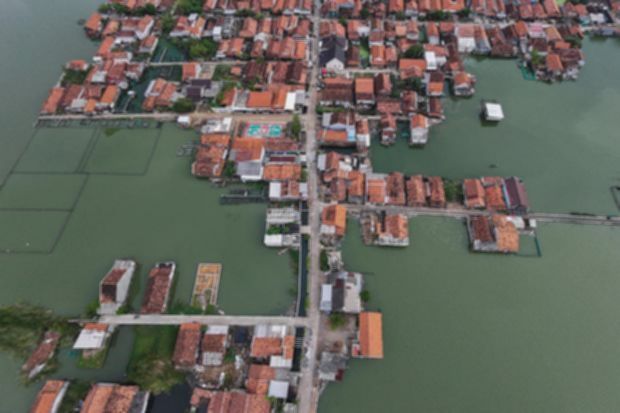
Indonesia is actively seeking to attract Japanese investment in key industrial and infrastructure projects, signaling a strengthened partnership focused on green and sustainable growth. During the Indonesia-Japan Investment Forum (IJIF) 2026, the archipelago nation presented several significant opportunities, including tin downstreaming projects at JIIPE (Java Integrated Industrial & Port Estate) in Gresik, East Java, and the ambitious Giant Sea Wall (GSW) project.
Maria Renata Hutagalung, Deputy Chief of Mission at the Indonesian Embassy in Tokyo, highlighted the shared vision between Indonesia and Japan to cultivate new growth engines that are greener, more resilient, and sustainable. She emphasized Japan’s role not just as a top five investor in Indonesia but as a trusted development partner, responsible for over 278,000 jobs and providing strong support for Indonesia’s industrial downstreaming agenda and energy transition initiatives.
Further solidifying this commitment, Indonesia also showcased the Industropolis Batang SEZ (Special Economic Zone) mega-project. This zone is designed to foster a high-tech industrial ecosystem, concentrating on sectors such as electric vehicles (EVs), data centers, and advanced manufacturing.
Another promising venture presented is the Biomass Energy project in Grobogan, Central Java. This initiative aims to convert corn agricultural waste into biomass energy, with an estimated capital expenditure of $15.5 million USD. Reports indicate that this project has already garnered significant interest from Japanese powerhouse Kobelco, prompting further discussions.
Cahyo Purnomo, Director of Investment Promotion for East Asia, South Asia, the Middle East, and Africa at the Ministry of Investment/BKPM, revealed impressive figures for Japanese foreign direct investment (FDI) in Indonesia. From 2021 to the first quarter of 2026, Japanese FDI reached a substantial $18.1 billion USD, with a robust average annual growth rate of 13.2 percent.
Despite this strong performance, Purnomo acknowledged the ongoing challenge of economic equalization, noting that a striking 94 percent of Japanese investment projects are currently concentrated on the island of Java. In response, the Indonesian government is proactively encouraging Japanese investors to explore the abundant and lucrative opportunities available beyond Java.
The IJIF 2026 proved to be more than just a presentation platform; it successfully fostered tangible business commitments. The trust placed in Indonesia by Japanese investors was clearly demonstrated through the announcement of Letters of Intent (LoIs) from prominent companies, including Pongamia Co., Ltd and Onoda Inc.
Pongamia Co., Ltd has declared its commitment to investing in Indonesia’s renewable energy sector by developing Pongamia plantations. This project is slated to produce biodiesel and bio-jet fuel, aligning perfectly with Indonesia’s green energy transition roadmap.
Meanwhile, Onoda Inc. is targeting the manufacturing sector with plans to assemble ultrasonic gas meter equipment originating from Japan. This investment is intended to bolster the government’s program aimed at expanding the reach of the national household gas network.
Summary
Indonesia is actively seeking Japanese investment for major green and sustainable projects, highlighted at the Indonesia-Japan Investment Forum (IJIF) 2026. Key opportunities include tin downstreaming at JIIPE in Gresik, the Giant Sea Wall project, and the Industropolis Batang SEZ focusing on high-tech sectors like EVs and data centers. A Biomass Energy project in Grobogan, converting agricultural waste to energy, is also a notable venture attracting interest.
Japanese foreign direct investment in Indonesia has been substantial, reaching $18.1 billion USD from 2021 to Q1 2026 with a 13.2% annual growth rate. To address the concentration of 94% of investment on Java, Indonesia is encouraging exploration of opportunities on other islands. The IJIF 2026 also saw tangible commitments, with Letters of Intent from companies like Pongamia Co., Ltd for renewable energy and Onoda Inc. for manufacturing gas meter equipment.