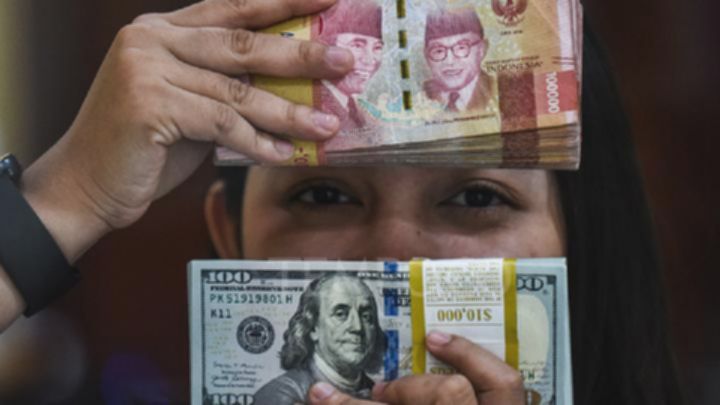

The Indonesian rupiah has faced renewed downward pressure, weakening to 17,870 per US dollar on the morning of Thursday, May 28, 2026. Ibrahim Assuaibi, Director of PT Traze Andalan Futures, attributes this depreciation to a confluence of both global and domestic economic headwinds.
On the global front, escalating geopolitical tensions in the Middle East have unsettled markets. Furthermore, the US Federal Reserve is expected to maintain high interest rates through the end of the year, providing significant momentum for the dollar and keeping other currencies, including the rupiah, under duress.
Domestically, Ibrahim highlighted a series of factors exacerbating the currency’s decline. “The weakening of the rupiah is compounded by rising global oil prices, which drive up demand for dollars for oil imports,” Ibrahim noted in his statement on May 28, 2026. He also pointed to substantial dividend repatriations, a shift in domestic savings toward foreign currencies, and a massive debt maturity totaling 600 trillion rupiah in interest obligations as key drivers of the slump.
Beyond macroeconomic pressures, Ibrahim raised concerns regarding the governance of the Merah Putih Cooperative and the government’s free school meals program. He argued that uncertainties surrounding the management of these priority initiatives have unnerved investors, leading to capital outflows from the domestic market.
Looking ahead, Ibrahim predicts the rupiah may further approach the 18,000 level against the dollar. He noted that Bank Indonesia’s capacity to intervene in international markets is limited during national holidays. “In today’s trading, it is highly likely that the rupiah will weaken by 100 points, hovering around the 17,900 level,” he added.
Despite the market volatility, Finance Minister Purbaya Yudhi Sadewa maintains that the current decline is irrational. “In reality, it does not make sense. Usually, depreciation occurs when there is a fundamental economic disturbance,” Purbaya said after attending Eid al-Adha prayers at the Directorate General of Taxes office in Jakarta on Wednesday, May 27, 2026.
Purbaya expressed confidence in the national economy, stating he is not overly concerned. He assured the public that the government does not need to revise the 2026 State Budget (APBN) assumptions, despite the rupiah breaching the 17,800 threshold.
Ilona Estherina contributed to this report.
Editor’s Choice: If Kertajati Airport Becomes a Hercules Maintenance Facility
Summary
The Indonesian rupiah has depreciated to 17,870 against the US dollar, driven by a combination of global geopolitical tensions, high US interest rates, and rising oil prices. Domestic factors, including significant dividend repatriations, large debt maturities, and investor concerns regarding government program governance, have further exacerbated the currency’s decline. Experts warn that the rupiah may continue to slide toward the 18,000 level due to limited intervention capabilities during the holiday period.
Despite these market pressures, Finance Minister Purbaya Yudhi Sadewa maintains that the depreciation is irrational and not reflective of fundamental economic disturbances. The government remains confident in the national economy and has confirmed that there is no immediate need to revise the 2026 State Budget. Officials continue to monitor the situation while expressing optimism about the country’s economic resilience.