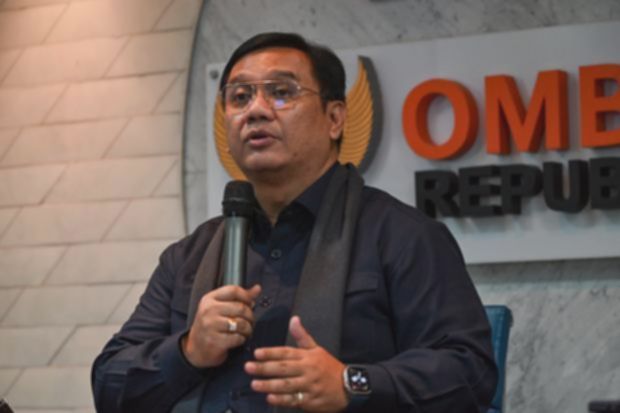

The Attorney General’s Office (AGO) has officially named YHK, identified as Yeka Hendra Fatika, a former member of the Ombudsman of the Republic of Indonesia for the 2021-2026 term, as a suspect in a significant case of obstruction of justice. Yeka is alleged to have impeded legal proceedings related to the high-profile 2022 corruption case involving crude palm oil (CPO) export facilities.
This complex legal saga originated from an Audit Report (LHP) by the Ombudsman concerning Ministry of Trade Regulation Number 8 of 2022. This regulation was pivotal, outlining the domestic export obligation policy specifically for CPO. The findings within this report ultimately led the Ministry of Trade (Kemendag) to revoke the aforementioned regulation, setting a crucial backdrop for the subsequent legal battles.
In a related development, the now-revoked regulation had served as the initial basis for the AGO’s prosecution of three major entities: the Wilmar Group, the Musim Mas Group, and the Permata Hijau Group. However, these companies were controversially acquitted by the Central Jakarta District Court (PN Jakarta Pusat) at that time. Syarief Sulaeman Nahdi, Director of Investigation at the Deputy Attorney General for Special Crimes, explained that a decision from the Jakarta State Administrative Court was crucially leveraged in the defense arguments of the three corporations, influencing the Central Jakarta District Court’s verdict to acquit them, a ruling known as onslag.
Despite the initial acquittals, the legal narrative took a dramatic turn when the Supreme Court definitively ruled that the Wilmar Group, Musim Mas Group, and Permata Hijau Group were lawfully and convincingly proven to have committed corruption in the 2022 CPO export facility case. Consequently, these three powerful corporations were ordered to pay a substantial restitution of Rp 17.7 trillion, underscoring the severity of the financial misconduct.
Syarief Sulaeman Nahdi meticulously outlined at least two distinct unlawful acts allegedly perpetrated by Yeka in this overarching case. The first significant transgression involved a calculated alteration of the investigation’s focus. Initially, Yeka had commenced an investigation into the scarcity of cooking oil on March 24, 2022. However, he is now suspected of having illicitly redirected this investigation to concentrate instead on maladministration purportedly caused by Ministry of Trade Regulation Number 8 of 2022. This alleged shift in focus meant that the LHP produced by Yeka was deemed instrumental in the Kemendag’s decision to revoke the critical Domestic Market Obligation (DMO) regulation.
The second alleged unlawful act attributed to Yeka involves the unauthorized dissemination of the LHP to entities outside of the government. Syarief underscored that Yeka’s investigation was self-initiated, which legally mandated that the Ombudsman’s LHP should only be furnished to the subject of the examination—in this instance, the Ministry of Trade. Nonetheless, Syarief’s investigation uncovered compelling evidence that Yeka unlawfully provided the LHP to the legal counsel representing the three implicated corporations: Marcella Santoso and the Arianto Arnaldo Law Firm. This action, according to Syarief, indicates that the Ombudsman’s LHP was directly issued by Yeka, raising serious questions about the legality and methods employed in its creation.
The decision to designate Yeka as a suspect followed a thorough examination of witnesses and a considerable body of evidence. Among the critical pieces of evidence unearthed was a bank statement belonging to an individual closely associated with Yeka, which purportedly revealed a suspicious flow of funds originating from the Wilmar Group. This financial trail provides a tangible link connecting Yeka’s alleged actions to one of the central figures in the CPO corruption scandal.
As a result of these findings, Yeka has been charged under two distinct articles concerning the obstruction of legal proceedings: Article 20 of Law Number 31 of 1999 and Article 21 of Law Number 1 of 2023. These severe charges carry a potential maximum imprisonment of up to 18 years and a substantial fine of up to Rp 800 million. Currently, the suspect is being held for the next 20 days at the Salemba Detention Center, a branch of the Attorney General’s Office, as the investigation progresses. Syarief affirmed that “the suspect is currently being detained for the next 20 days at the Salemba Detention Center, Attorney General’s Office Branch.”
Summary
The Attorney General’s Office has named Yeka Hendra Fatika, a former Ombudsman of the Republic of Indonesia, a suspect for obstruction of justice. He is accused of impeding legal proceedings related to the 2022 crude palm oil (CPO) export facilities corruption case. This obstruction allegedly involved altering the focus of an investigation into cooking oil scarcity to instead target a Ministry of Trade regulation and unlawfully disseminating the Ombudsman’s Audit Report (LHP) to the legal counsel of implicated corporations.
The case stems from an Ombudsman audit of Ministry of Trade Regulation Number 8 of 2022, which was later revoked and served as the basis for prosecuting Wilmar Group, Musim Mas Group, and Permata Hijau Group. Although initially acquitted, the Supreme Court later ruled these companies guilty of corruption, ordering them to pay Rp 17.7 trillion in restitution. Evidence, including bank statements showing suspicious fund flows from Wilmar Group, supports the charges against Yeka, who faces up to 18 years imprisonment and a substantial fine.