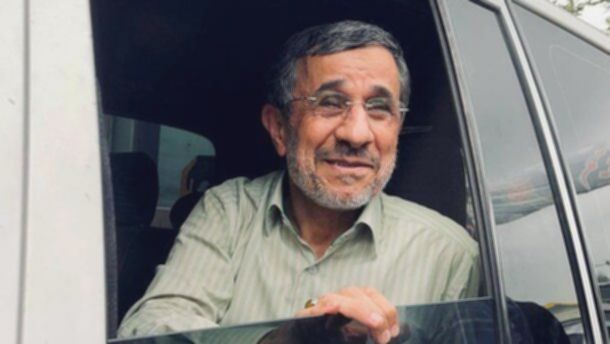

“You should know that this hated regime [Israel] is on its way to collapse. God willing, it will be wiped off the geographical map, and no factor can save it.”
For years, declarations like this cemented former Iranian President Mahmoud Ahmadinejad as one of the world’s most outspoken anti-Israel figures. By denying the Holocaust, characterizing Israel as a “cancerous tumor,” and steadfastly defending Iran’s nuclear ambitions despite crippling international sanctions, he became a central reference point for Israeli officials seeking to illustrate the existential threat posed by Tehran.
However, Ahmadinejad has recently found himself back in the spotlight following a New York Times report alleging that the United States and Israel had drafted “post-war plans” involving him. The report suggested that intelligence officials explored the possibility of Ahmadinejad distancing himself from the Iranian security establishment to emerge as a viable future leader. According to the same report, these plans ultimately stalled after an attempt to extract Ahmadinejad from house arrest early in the war resulted in him sustaining injuries.

Ahmadinejad and his inner circle have not addressed these claims, and his current whereabouts remain unknown. The report was met with widespread skepticism among U.S. and Israeli analysts, who questioned why either nation would consider aligning with a figure synonymous with virulent anti-Israel rhetoric. This unexpected development has reignited debates over how the world should categorize the former president.
A Useful Adversary for Israel?
To navigate this controversy, one must revisit the early days of Ahmadinejad’s political ascent. Initially a relative unknown, he was elected mayor of Tehran in 2003 before ascending to the presidency in 2005 with the clear backing of Supreme Leader Ali Khamenei.
Running on a platform of social justice and anti-corruption, Ahmadinejad quickly gained global notoriety—not for his domestic policies, but for his incendiary rhetoric. At a 2005 conference titled “A World Without Zionism,” he famously asserted that a world free of America and Zionism was an achievable goal. He later hosted the highly controversial International Conference to Review the Global Vision of the Holocaust, which drew condemnation from the international community.
Curiously, some Israeli officials eventually viewed Ahmadinejad as a political asset. In 2008, former Mossad chief Efraim Halevy famously called him “Iran’s greatest gift to Israel,” arguing that his extreme rhetoric made it significantly easier for the world to take the Iranian threat seriously. Supporters of the former president reject this, maintaining that his policies were rooted in genuine, uncompromising ideology.
A Shift in Image
Following the conclusion of his second term in 2013, Ahmadinejad’s relationship with Supreme Leader Ali Khamenei and the Islamic Revolutionary Guard Corps (IRGC) soured. He was repeatedly barred by Iran’s Guardian Council from running for president in subsequent elections.
Responding to the New York Times report, Raz Zimmt, an expert on Iran at Israel’s Institute for National Security Studies, described the former leader as a “combination of populism and opportunism.” Zimmt noted that while Ahmadinejad has attempted to pivot toward a more moderate image on social media—even quoting American rapper Tupac Shakur and praising Donald Trump—these efforts have failed to garner the widespread domestic support needed to challenge the regime, which oversees a population of over 90 million.

Western Experts Express Doubt
Several U.S. experts have expressed deep skepticism regarding the existence of any “serious operational plan” to return Ahmadinejad to power. Max Abrahms, a professor at Northeastern University, argued that the report should be viewed with extreme caution, citing the high volume of misinformation circulating during the current conflict. He noted that Ahmadinejad’s track record of Holocaust denial makes him an unlikely partner for Israel.
Ilan Berman of the American Foreign Policy Council similarly dismissed the notion that the U.S. and Israel would orchestrate his return. Michael Rubin, a scholar at the American Enterprise Institute, went further, calling the report “fanciful” and suggesting that the New York Times relied too heavily on anonymous sources. In response, the New York Times maintained on X that it stands by its reporting, which it stated was based on conversations with various American, Israeli, and Iranian officials.
Reaction from Israel
Security analysts in Israel have focused on what this narrative suggests about how their country perceives Iranian politics. Danny Citrinowicz, also of the Institute for National Security Studies, stated on X that any attempt to “install” Ahmadinejad demonstrates a fundamental misunderstanding of the Iranian system. He argued that without the support of the IRGC, Ahmadinejad has no real power base.
Yossi Melman, a veteran security analyst, labeled the entire story as “crazy,” suggesting that the notion of triggering regime change through minority uprisings and airstrikes indicates that planners in the West may be “living in a fantasy world.”

Why Ahmadinejad?
Despite the skepticism, the question remains: why would his name emerge at all? The answer likely lies in the unique combination of his fame, his deep understanding of Iran’s political mechanics, and his status as an outsider within the current leadership. While he is not a natural ally to the West, he possesses the brand recognition and populist appeal that some foreign policy strategists might view as a tool to fracture the ruling elite during a period of extreme instability.
Defining the Real Ahmadinejad
Throughout his career, Ahmadinejad has proven himself to be a political chameleon. While he once built his legitimacy by accusing reformers of treason, he later sought to reconcile with those same figures after leaving office. This tendency to shift positions rather than adhere to a rigid ideological line has fueled speculation about his true motivations.
There is currently no concrete evidence linking Ahmadinejad to any clandestine cooperation with Israel or the United States. Yet, the persistent contradictions of his career—from an ardent anti-Israel firebrand to a reported option for the future of the Iranian state—ensure that he remains one of the most enigmatic and divisive figures in contemporary Middle Eastern politics.

- Ayatollah Ali Khamenei: Succession and the future of Iranian leadership.
- The fate of nine Iranian heads of government since the 1979 Revolution: From exile to assassination.
- Tehran condemns U.S. strikes in southern Iran as a severe violation of the ceasefire.
- Who is Mojtaba Khamenei, and could he be the next Supreme Leader?
- The resilience of the Iranian power structure despite the loss of key officials.
- The legacy of Ali Larijani and the implications of his absence on Iranian leadership.
Summary
Former Iranian President Mahmoud Ahmadinejad, once globally infamous for his virulent anti-Israel rhetoric and Holocaust denial, has recently returned to the spotlight following a report alleging that the U.S. and Israel considered him a potential future leader to challenge the current Iranian regime. Analysts remain highly skeptical of these claims, noting that his historical stance makes him an unlikely partner, and highlighting that he lacks the necessary support from Iran’s powerful security establishment to exert real political influence.
Although some foreign policy strategists may view Ahmadinejad as a tool to fracture Iran’s ruling elite due to his populist appeal and outsider status, experts dismiss the idea of an operational plan to return him to power as fanciful. Ahmadinejad’s career has been marked by ideological shifts and political opportunism, solidifying his reputation as an enigma within Middle Eastern politics. Currently, there is no credible evidence of clandestine cooperation between the former president and Western powers.