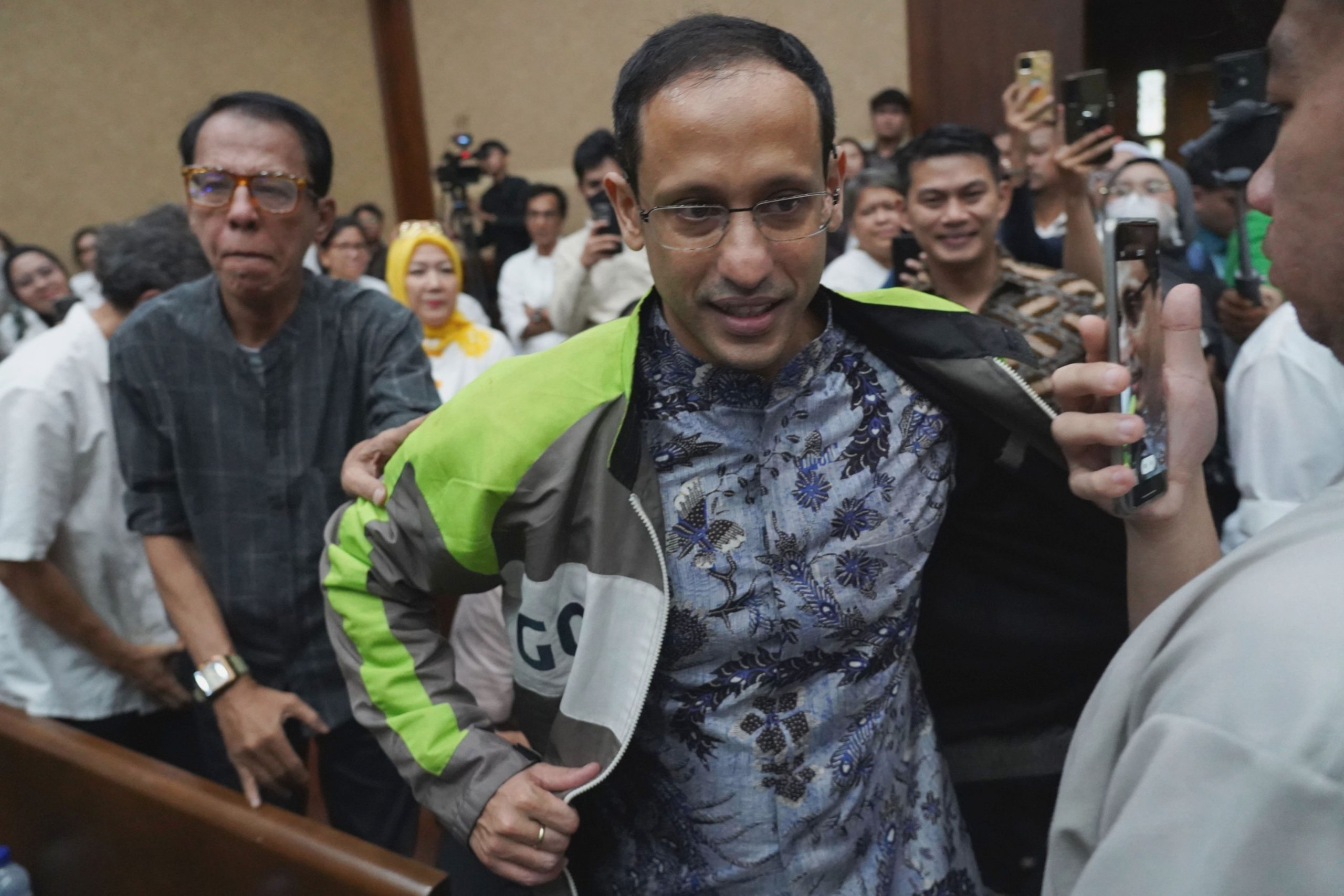

The corruption trial involving the procurement of Chromebook laptops has taken a political turn, with former Minister of Education, Culture, Research, and Technology Nadiem Makarim claiming his prosecution is driven by external interests. During his defense plea (pleidoi) on Tuesday (June 2), Nadiem suggested that his legal troubles were orchestrated by “powerful entities” within the education sector who opposed his digitalization policies.
Nadiem argued that his drive toward educational digitalization disrupted established revenue streams for various parties. He further acknowledged that his leadership style, which departed from traditional bureaucratic norms—such as refusing to invite legislators to regional visits or declining non-program-related political functions—likely caused resentment among influential figures. “I failed to realize that a ministerial role is inherently political,” Nadiem stated, adding that he underestimated the importance of maintaining institutional alliances. “My advice to those who serve the state: find a balance between professionalism and political etiquette, because small frictions can turn into deep-seated grudges.”
Prosecutors Deny Political Motivation
Public Prosecutor (JPU) Parade Hutasoit firmly rejected the allegations of politicization. Speaking at the Jakarta Corruption Court, Parade emphasized that the proceedings are strictly centered on law enforcement and are based on factual evidence presented throughout the trial.
“If he views it that way, we maintain that such a perception is incorrect,” Parade stated. He argued that the prosecution’s case is purely a response to investigative findings, noting, “I cannot say whether the case is political or not, but it is clear that the case is rooted in investigation findings that contradict the reality of the indictment.”
Public Support and the Court of Opinion
The trial has sparked significant public interest, drawing support for Nadiem from celebrities, influencers, and figures such as Cinta Laura, Maudy Ayunda, and Malaka Project CEO Ferry Irwandi. In response to this outpouring of support on social media and inside the courtroom, Prosecutor Parade suggested that the public may not have a full grasp of the case’s complexities.
Parade posited that the high level of public support might stem from a lack of awareness regarding the details presented during the four-month trial. “It is possible that the public or netizens supporting Nadiem have not been properly informed,” he said. “This trial has been ongoing for about four months, so many facts have not yet reached the public consciousness.”
While the prosecution acknowledged the ongoing discourse, they maintained that they cannot control public opinion. As the trial nears its conclusion, the divide between Nadiem’s narrative of political victimization and the prosecution’s insistence on a standard legal process remains a focal point of the proceedings.
Summary
Former Minister of Education Nadiem Makarim has claimed that his corruption trial regarding Chromebook procurement is politically motivated, alleging that powerful entities targeted him for disrupting established interests through his digitalization policies. He reflected on his tenure, noting that his refusal to engage in traditional political maneuvering likely created resentment among influential figures. In his defense, he urged future public servants to better balance professional responsibilities with political etiquette to avoid such conflicts.
Public prosecutors have firmly rejected these allegations, maintaining that the legal proceedings are based strictly on evidence and investigative findings rather than external political pressure. Addressing the significant public support for the former minister, prosecutors suggested that online observers may lack a comprehensive understanding of the facts presented during the four-month trial. As the case nears its conclusion, the legal process continues to emphasize judicial evidence over the growing public debate.