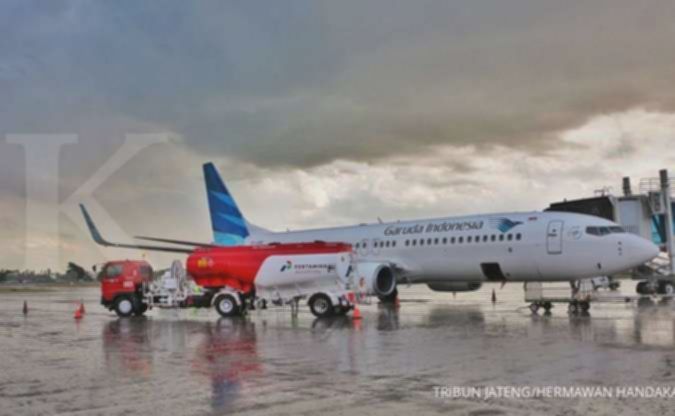

JAKARTA. The 10% reduction in aviation fuel (avtur) prices announced by Pertamina Patra Niaga on June 1, 2026, has emerged as a significant tailwind for the aviation industry. Industry experts believe this policy could substantially alleviate operational burdens, given that fuel remains the largest cost component for airlines.
Imam Gunadi, Equity Analyst at PT Indo Premier Sekuritas (IPOT), highlighted the positive impact of this price adjustment. “Since fuel is the primary driver of operational costs, this price cut serves as a favorable development for the sector,” Imam noted on Tuesday (June 2, 2026).
Read also: Temas (TMAS) Targets IDR 5.53 Trillion Revenue in 2026, Allocates IDR 2.5 Trillion for Capex
The financial impact is evident when reviewing the 2025 performance data. PT Garuda Indonesia Tbk (GIAA) reported fuel expenses of US$573 million, accounting for 17.9% of its total revenue. Meanwhile, PT AirAsia Indonesia Tbk (CMPP) recorded fuel costs of IDR 3.16 trillion, representing a higher 40.1% share of its revenue. Assuming consistent fuel consumption, this 10% price reduction could lead to annual savings of approximately US$57 million for GIAA and IDR 316 billion for CMPP.
“Relative to their size, CMPP stands to benefit more significantly in terms of margins and net profit because its fuel cost structure is more intensive,” Imam explained. He anticipates that the benefits will begin to reflect in the second-quarter financial results for 2026, with a more pronounced impact appearing in the second half of the year if low price trends persist.
While some argue that lower fuel costs might lead to a reduction in fuel surcharges, which could impact ticket prices, industry analysts view this as a potential net positive. “While lower fuel surcharges might compress yields, airlines are simultaneously enjoying lower fuel expenditures. Consequently, the impact on margins is not necessarily negative,” he added.
Read also: MSCI Sentiment Wanes; Fundamental Performance to Drive BBCA Stock Outlook
In fact, more affordable ticket prices could stimulate passenger demand, particularly within the price-sensitive domestic market. “Lower prices may unlock pent-up demand, especially within the leisure segment and on domestic routes,” Imam noted. In an industry defined by high fixed costs, an increase in passenger volume and load factors is expected to drive operational efficiency, offsetting any potential decline in per-passenger yields.
However, investors are advised to monitor currency fluctuations. Because major expenses such as aircraft leasing and maintenance are denominated in US dollars, the benefits of lower fuel prices could be tempered by a weakening rupiah. “In extreme cases, currency volatility could erode the gains made from cheaper fuel,” he warned.
Looking at the short-term outlook, performance is expected to improve in the second quarter of 2026, bolstered by both the reduced fuel costs and the seasonal boost from holiday travel. Given the higher sensitivity of its cost structure to fuel prices, CMPP is positioned as the primary beneficiary of these changes compared to GIAA.
Consequently, IPOT maintains a more constructive outlook on CMPP stock relative to GIAA, viewing it as a stronger representative of the aviation sector’s recovery due to its higher operational leverage in response to declining fuel expenses.
Summary
The 10% reduction in aviation fuel prices by Pertamina Patra Niaga on June 1, 2026, is a significant positive development for the aviation industry, given that fuel is the largest operational cost component. This price cut is projected to generate substantial annual savings, such as approximately US$57 million for Garuda Indonesia (GIAA) and IDR 316 billion for AirAsia Indonesia (CMPP). CMPP is anticipated to benefit more significantly in terms of margins and net profit due to its higher fuel cost intensity relative to its revenue.
While lower fuel surcharges might lead to reduced ticket prices, this could stimulate passenger demand, particularly in the price-sensitive domestic market, improving operational efficiency. However, a weakening rupiah poses a risk, as major USD-denominated expenses like aircraft leasing could erode gains from cheaper fuel. Analysts expect improved performance in Q2 2026, with IPOT maintaining a more constructive outlook on CMPP stock over GIAA as the primary beneficiary of these changes.