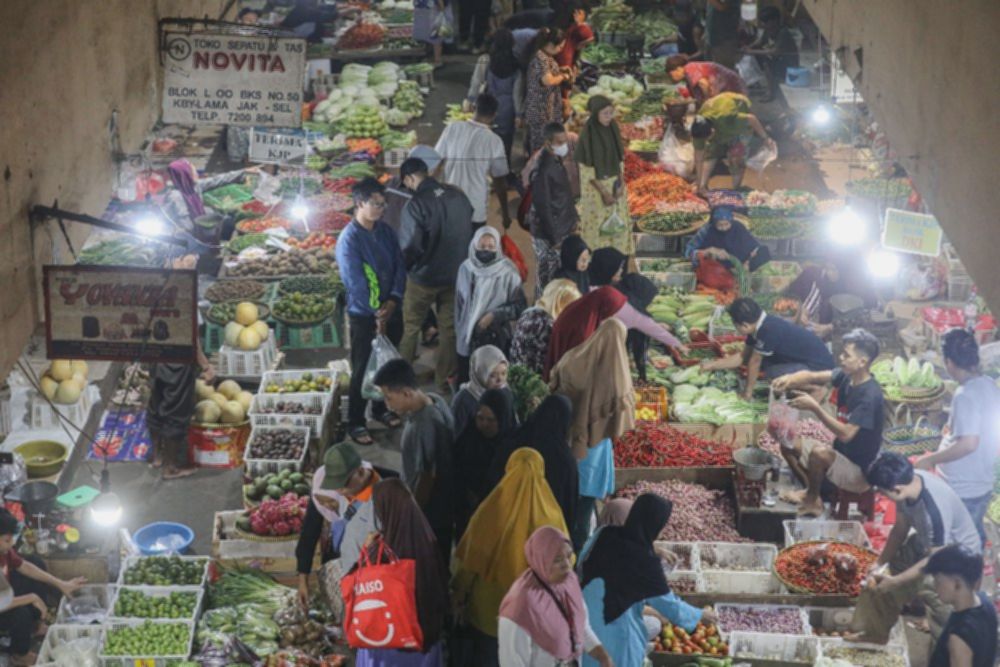

SEMARANG — Consumer confidence in Central Java remains robust as of March 2026. The region’s Consumer Confidence Index (IKK) reached 116.52, firmly staying above the optimistic threshold of 100, signaling sustained economic momentum for the province.
Andi Reina Sari H., Deputy Head of the Bank Indonesia Representative Office for Central Java, attributed this positive sentiment to a combination of present economic conditions and optimistic future expectations. “This stability is supported by consumers’ positive outlook on current economic conditions alongside expectations for the region’s future economic performance,” she explained on Sunday (May 31, 2026).
Read Also: Consumption and Investment Drive Central Java Economic Growth in Q1 2026
The provincial trend mirrors national consumer survey results. Furthermore, this optimism is widespread across key urban centers in the province, including Semarang, Solo, Purwokerto, and Tegal, all of which continue to report high levels of consumer confidence.
The Economic Condition Index (IKE) for March 2026 stood at 109.63, reinforcing the reality of a stable economic climate. This strength is largely driven by high public confidence in current income levels, favorable perceptions regarding job availability, and a sustained appetite for durable goods.
Read Also: Batang Industropolis SEZ Promotes Central Java Investment Potential in Tokyo
Looking ahead, the outlook remains bright. The Consumer Expectation Index (IEK) reached 123.41 in March 2026, suggesting that consumers are optimistic about income growth, the creation of new job opportunities, and an uptick in business activity over the next six months.
This psychological resilience is backed by tangible growth. According to the Central Statistics Agency (BPS) report on May 5, 2026, Central Java’s economy grew by 5.89% year-on-year (yoy) in the first quarter of 2026. This performance outperformed both the regional average for Java (5.79%) and the national economic growth rate (5.61%).
Household consumption remains the primary engine of the provincial economy, accounting for 60.01% of the total Gross Regional Domestic Product (PDRB). This sector grew by 5.08% (yoy), bolstered by high mobility during the 2026 Idulfitri festive season.
Investment also played a pivotal role, with Gross Fixed Capital Formation (PMTB) surging by 9.61% (yoy). This acceleration was fueled by intensive factory construction in industrial estates and the steady progress of strategic regional projects.
From a sectoral perspective, the manufacturing industry remains the largest contributor with a 32.69% share, showing a steady growth of 4.04% (yoy) despite national flood challenges. Meanwhile, the construction sector saw a significant rise of 11.91% (yoy). Furthermore, the accommodation and food service sectors experienced a 14.14% (yoy) increase, driven in part by the implementation of the Free Nutritious Meal (MBG) program.
Summary
Consumer confidence in Central Java remains strong, with the Consumer Confidence Index reaching 116.52 in March 2026. This optimism is driven by positive perceptions of current economic conditions, including stable income levels and job availability, alongside favorable expectations for future growth across key urban centers. The region’s economic resilience is further supported by a robust 5.89% year-on-year growth in the first quarter of 2026, outperforming both national and regional averages.
Economic momentum is primarily fueled by household consumption, which accounts for over 60% of the provincial economy, and a significant 9.61% surge in fixed capital investment. Major sectors such as manufacturing, construction, and the food service industry have shown substantial growth, benefiting from regional infrastructure projects and festive season activity. These indicators collectively suggest a stable and productive economic outlook for Central Java in the coming months.