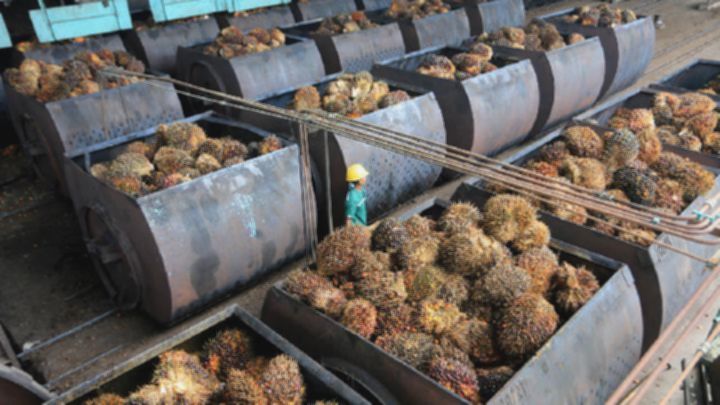

The Indonesian Palm Oil Association (GAPKI) has reported a significant monthly decline in both the production and consumption of crude palm oil (CPO). According to a written statement released by GAPKI on Monday, May 25, 2026, CPO production in March 2026 reached 4,403 thousand tons, marking a substantial 12.22 percent drop from the 5,015 thousand tons recorded in the preceding month.
This downward trend was not limited to CPO alone. GAPKI also noted a parallel decrease in the production of processed palm kernel oil (PKO) during March 2026. PKO production contracted by 12.35 percent, settling at 418 thousand tons for the month.
Domestic consumption of palm oil products also experienced a downturn, falling by 8.25 percent to 2,115 thousand tons in March, compared to 2,305 thousand tons in February. The most substantial reduction was observed in food consumption, which decreased by 9.03 percent to 897 thousand tons in March. Furthermore, biodiesel consumption saw a 7.71 percent drop, settling at 1,056 thousand tons, while oleochemical consumption declined by 7.43 percent to 162 thousand tons. Despite these monthly reductions, GAPKI highlighted a positive year-on-year trend for domestic CPO consumption, which rose by 7.47 percent to a total of 6,524 thousand tons by the end of March 2026.
Beyond domestic figures, the Indonesian palm oil industry also recorded a significant decline in its total export performance for palm oil products, which plummeted by 34.25 percent in March 2026. The total export volume for palm oil products stood at 2,168 thousand tons, substantially lower than the 3,297 thousand tons achieved in February 2026. Crude Palm Oil (CPO) exports, in particular, suffered a sharp contraction, falling by 75.61 percent. The total CPO export volume for March was a mere 96 thousand tons, a steep decline from the 295 thousand tons exported in February 2026.
Palm Kernel Oil (PKO) exports also mirrored the general downward trend, decreasing by 33.57 percent to 1,506 thousand tons in March. However, amidst the widespread declines, oleochemicals emerged as the sole palm oil derivative product to register export growth. Oleochemical export performance increased by 1.42 percent to 468 thousand tons monthly. On a year-on-year basis, oleochemical exports demonstrated even stronger growth, rising by 11.91 percent to reach 8,546 thousand tons.
Examining export destinations reveals a broad-based downturn, with GAPKI reporting reduced exports to nine countries. Exports to the Chinese market saw a decrease of 314 thousand tons in March, followed by India with a reduction of 291 thousand tons. Pakistan experienced a decline of 113 thousand tons, while exports to Bangladesh dropped by 90 thousand tons. Further regional declines included Africa, which saw an 81 thousand ton decrease, and the Middle East, which registered a sharp drop of 77 thousand tons. Other notable reductions were in exports to Malaysia (71 thousand tons), the United States (41 thousand tons), and the European Union (25 thousand tons). In contrast to these widespread contractions, Russia stood out as the only country to show an increase in Indonesian palm oil exports, rising by 24 thousand tons.
The total export value of palm oil products in March also declined, dropping by 29.27 percent compared to February, settling at US$2.61 billion. Despite this monthly decrease, the cumulative export value up to March 2026 demonstrated a robust 10.40 percent increase year-on-year. According to GAPKI, this annual rise in export value was primarily driven by a surge in overall export volume and an increase in the average price during January-March 2026, which reached US$1,356 per ton CIF Rotterdam.
Looking at the overall supply chain, GAPKI reported that the ending stock for March 2026 stood at 2,568 thousand tons, representing a monthly increase. This figure was derived from an initial stock of 2,026 thousand tons at the beginning of March, combined with a total production of 4,821 thousand tons, domestic consumption of 2,115 thousand tons, and exports totaling 2,168 thousand tons during the month.
Editor’s Choice: The Benefits and Disadvantages of a Single-Door Commodity Export Policy
Summary
The Indonesian Palm Oil Association (GAPKI) reported significant monthly declines in both crude palm oil (CPO) and palm kernel oil (PKO) production in March 2026. CPO production dropped by 12.22% to 4,403 thousand tons, while PKO production contracted by 12.35%. Domestic palm oil consumption also fell by 8.25% monthly across various sectors; however, domestic CPO consumption showed a positive 7.47% year-on-year increase by the end of March 2026.
Total Indonesian palm oil product exports significantly plummeted by 34.25% in March 2026, with CPO exports alone experiencing a sharp 75.61% contraction. Exports decreased to nine countries, including major markets like China and India, while Russia was the sole destination to see an increase. Despite a monthly decline, the cumulative export value for palm oil products rose by 10.40% year-on-year by March 2026, driven by higher overall export volume and increased average prices.