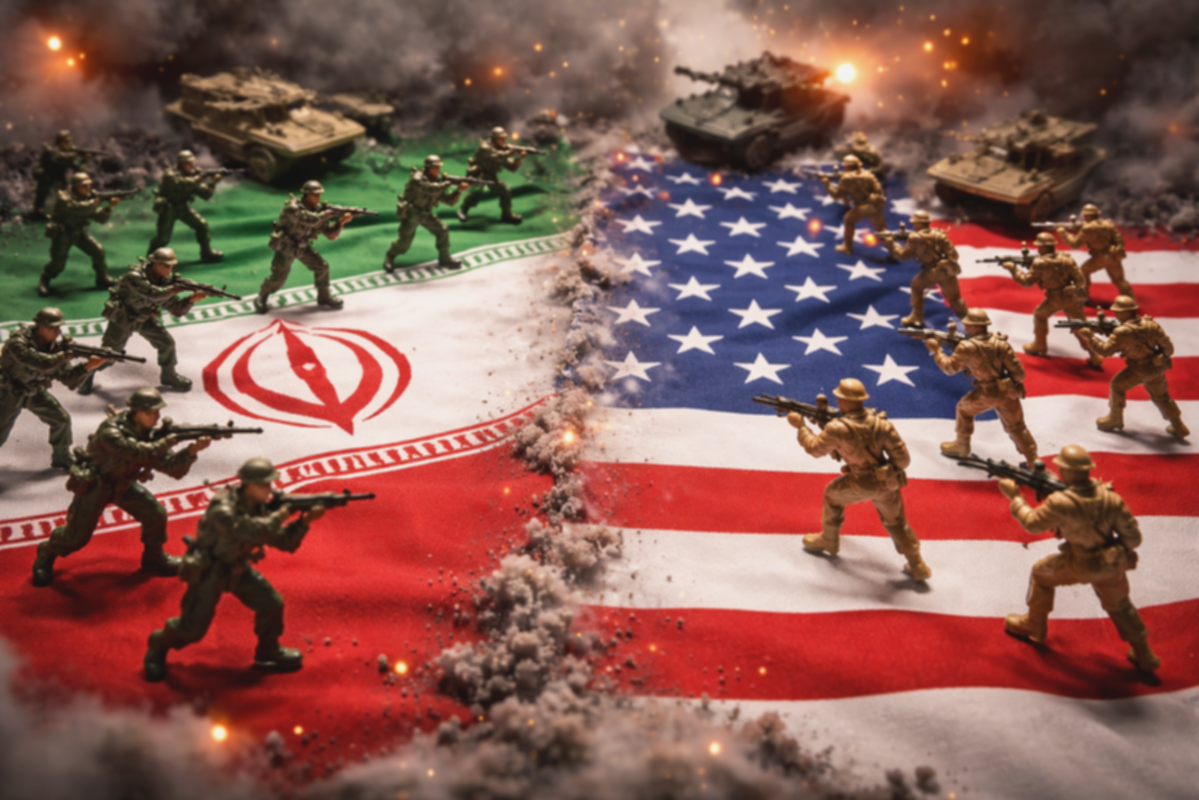

Tensions in the Middle East have flared once again as the United States and Iran traded direct strikes, effectively shattering the standing ceasefire. On Thursday, May 27, Iran’s Islamic Revolutionary Guard Corps (IRGC) launched an assault on a U.S. airbase in Kuwait.
According to the semi-official Iranian news agency Tasnim, the IRGC confirmed that the retaliatory strike took place at 4:50 a.m. local time. The organization issued a stern warning, threatening more severe repercussions should the U.S. continue its perceived aggression. “This serves as a serious warning to our enemies: aggression will not go unanswered. Should it be repeated, our response will be even more decisive,” the IRGC stated.
In response to the escalation, the Kuwaiti military announced via X (formerly Twitter) that they had activated their air defense systems to neutralize what they described as a threat from “hostile missiles and drones.”
This latest conflict follows a series of military engagements initiated earlier by the United States. Prior to the Kuwaiti base attack, U.S. forces targeted an Iranian ground control station in Bandar Abbas that was reportedly preparing to launch drones. Additionally, the U.S. military successfully shot down an Iranian drone in the same region, citing the threat it posed to maritime security in the Strait of Hormuz. A U.S. official, speaking on condition of anonymity, maintained that these actions were “purely defensive and intended to preserve the ceasefire.”
The situation further intensified earlier in the week when the U.S. Central Command (CENTCOM) conducted strikes in southern Iran. Those operations focused on neutralizing Iranian missile launch sites and vessels suspected of attempting to lay naval mines.
Adding to the diplomatic volatility, U.S. President Donald Trump issued a sharp warning to Oman, threatening military action if the nation collaborated with Iran to control the Strait of Hormuz. When asked by a reporter about joint proposals from Iran and Oman to oversee trade in the critical waterway, President Trump was unequivocal during a cabinet meeting on Wednesday, May 27.
“No one will control it. It is international water, and Oman will behave like any other nation, or we will have to blow them up,” President Trump declared. While he had previously characterized negotiations with Iran as progressing well, the President warned that the window for diplomacy is closing, noting that new attacks remain a possibility if ongoing talks fail to secure a lasting agreement.
Summary
Tensions in the Middle East have escalated following direct military confrontations between the United States and Iran, effectively ending the existing ceasefire. On May 27, Iran’s Islamic Revolutionary Guard Corps (IRGC) launched an aerial strike on a U.S. airbase in Kuwait, prompting the Kuwaiti military to activate its air defense systems. The IRGC has issued a formal warning, threatening more severe retaliation should U.S. aggression continue.
This attack followed a series of U.S. military operations, including strikes on Iranian missile launch sites, naval vessels, and a ground control station near Bandar Abbas. Additionally, President Donald Trump has issued a stern warning to Oman regarding the Strait of Hormuz, declaring that any attempt to restrict the waterway would be met with military force. While diplomatic efforts remain ongoing, officials indicate that the window for a peaceful resolution is rapidly closing as regional instability grows.