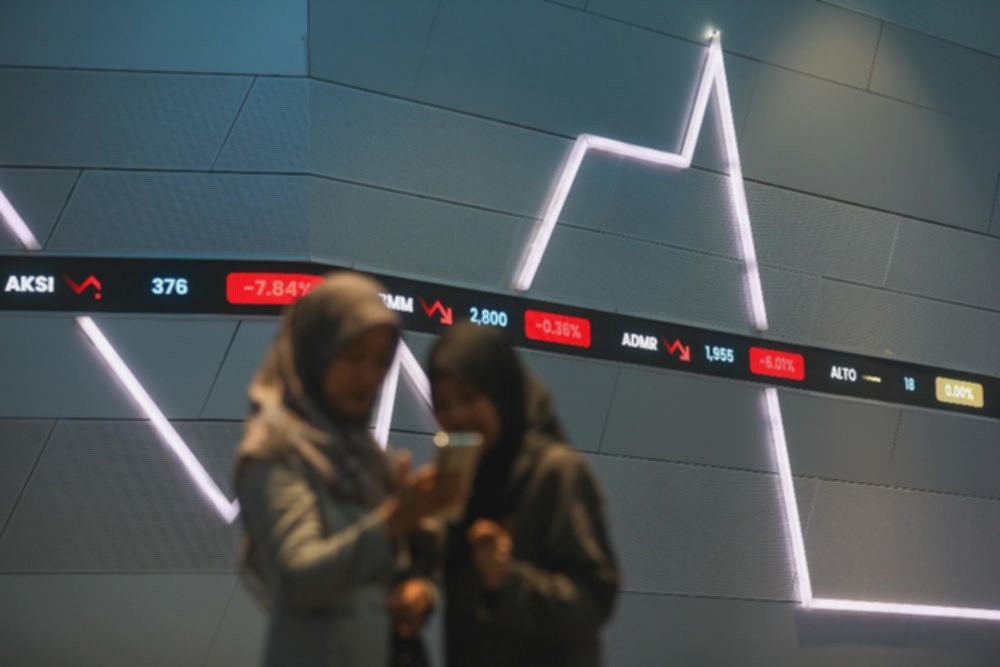

99 Tekno JAKARTA – The Jakarta Composite Index (IHSG) is projected to continue experiencing short-term volatility following the rebalancing actions by several global index providers, which led to the exclusion of Indonesian stocks from their respective indices. This move is expected to exert downward pressure on the market in the immediate future.
Most recently, FTSE Russell conducted a rigorous review, leading to the “clean-up” of several Indonesian stock market components during its quarterly review period for June 2026. The prominent index reported the removal of a total of four Indonesian equities from its listings.
The four delisted stocks include PT Dian Swastatika Sentosa Tbk. (DSSA), PT Daaz Bara Lestari Tbk. (DAAZ), PT Hillcon Tbk. (HILL), and PT Mulia Industrindo Tbk. (MLIA). These companies were excluded primarily due to issues such as concentrated ownership structures and their failure to meet crucial free float requirements or surveillance stock screen criteria, which are essential for index inclusion.
According to Ajaib Sekuritas, as highlighted on their official website, the removal of these Indonesian stocks from FTSE’s rebalancing process has resulted in a decreased weighting for Indonesia within the index. This reduction subsequently increases the risk of substantial net sell activity from global passive funds that track the index.
Ajaib further elaborated that the net free float market capitalization of 39 Indonesian stocks categorized as Large and Mid Cap within the FTSE Russell emerging markets index initially stood at 0.88% of the total index. However, with the exclusion of DSSA, Indonesia’s weight promptly declined to 0.86% of the overall FTSE Russell emerging markets index. This marginal but significant drop signals potential shifts in investment allocations.
“This reduction in weighting risks triggering outflows from global institutional investors who utilize the FTSE Russell index as their primary investment benchmark,” Ajaib stated on its official website, as quoted on Tuesday (May 26, 2026). Ajaib detailed that the potential outflow from the Vanguard FTSE Emerging Market ETF alone could reach US$27.72 million, or approximately Rp487.8 billion. The total predicted outflow from passive funds is even more substantial, estimated at US$297 million, equivalent to Rp5.2 trillion.
“The selling pressure is anticipated to persist until the effective date of the rebalancing, scheduled for June 22, 2026,” Ajaib concluded, indicating a defined period of market adjustment.
Concurrently, Nafan Aji Gusta, Senior Analyst at Mirae Asset Sekuritas, echoed similar sentiments. He noted that amidst the ongoing MSCI and FTSE rebalancing activities, short-term stock market volatility is likely to persist. This instability is expected to continue until global passive funds fully complete their portfolio rebalancing processes. “Regarding the pricing-in of these events, it may not be entirely complete yet, as market participants must navigate a crucial phase leading up to the MSCI rebalancing’s effectiveness on May 29, and FTSE’s on June 22,” Nafan explained when contacted, quoted on Tuesday (May 26, 2026).
Despite the current challenges, Nafan believes that the opportunity for the Indonesian stock market to regain strength in the second half of 2026 remains wide open. However, he emphasized that several key preconditions must be met to facilitate this recovery.
Firstly, Nafan highlighted the critical importance of external factors, such as the de-escalation of geopolitical tensions between Iran-US and Israel. A calming of these tensions would serve as a significant positive catalyst for the domestic capital market. Additionally, clarity regarding the direction of The Fed’s interest rates is deemed crucial. Notably, Indonesian stocks are currently considered to be attractively discounted, presenting a potential buying opportunity.
Secondly, efforts to reform the Indonesian capital market have reportedly received positive signals from global index providers. This is evidenced by the adoption of the Indonesia Stock Exchange’s (IDX) HSC method for removing certain stocks from prominent indices. “In the long term, this will undoubtedly improve global investors’ perception, as our market will become significantly more credible, less susceptible to manipulation, and protected from extreme stock price fluctuations caused by artificial liquidity,” Nafan added, underscoring the benefits of enhanced market integrity.
Disclaimer: This news article is not intended to provide investment advice or encourage the buying or selling of stocks. Investment decisions are solely at the discretion of the reader. Bisnis.com is not responsible for any losses or gains arising from the reader’s investment decisions.