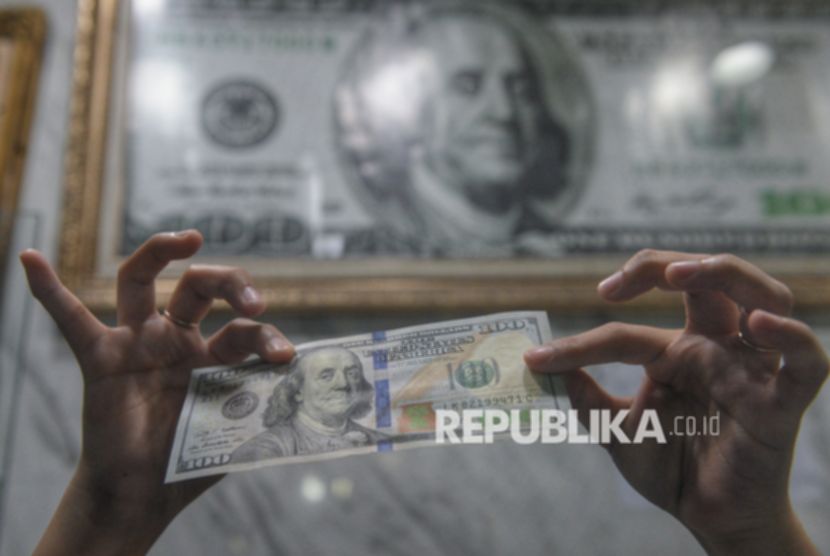

Bank Indonesia (BI) is closely monitoring volatile global and domestic financial markets as it takes decisive action to stabilize the Indonesian Rupiah. The local currency has recently breached the Rp 17,900 per US dollar mark, prompting the central bank to utilize all available policy instruments to maintain market liquidity and stability.
“Bank Indonesia remains active in the market, optimizing our policy tools to ensure that market mechanisms function efficiently and that sufficient foreign exchange liquidity is maintained to support financial market stability,” stated Ramdan Denny Prakoso, Head of the BI Communication Department, on Wednesday (June 2, 2026).
A cornerstone of this strategy is the tightening of foreign exchange purchase thresholds. As of June 2, 2026, BI has reduced the monthly limit for non-underlying US dollar purchases from USD 50,000 to USD 25,000 per individual. This follows an initial reduction from USD 100,000 to USD 50,000 implemented in April 2026, reflecting the bank’s commitment to curbing speculative pressure on the Rupiah.
Beyond purchase restrictions, BI is aggressively promoting the Local Currency Transaction (LCT) scheme. By encouraging the use of local currencies in bilateral trade, Indonesia aims to reduce its dependency on the US dollar. These collaborative efforts currently span across China, Japan, Malaysia, Thailand, South Korea, and the United Arab Emirates (UAE).
According to Bloomberg data, the Rupiah opened at 17,878 against the US dollar and later hit 17,959 in afternoon trading—marking a historic low for the currency. Despite these pressures, BI Governor Perry Warjiyo has highlighted that President Prabowo Subianto has mandated a seven-step strategic plan to bolster the currency. Warjiyo emphasized that the current weakness is primarily driven by short-term factors, including global oil price volatility, rising US interest rates, and capital outflows from emerging markets.
Seasonal demand also plays a role, with increased dollar requirements for dividend repatriations, debt servicing, and Hajj pilgrimage expenses. Nevertheless, Governor Warjiyo remains optimistic, asserting that the Rupiah is currently undervalued relative to its fundamental strength. With a robust economic growth rate of 5.61 percent in the first quarter of 2026, low inflation, and healthy credit expansion, the central bank maintains that the currency has significant potential for future recovery.
Lessons from 2015
The decision to tighten threshold regulations is supported by historical precedent. Ruth A. Cussoy Intama, Director of the BI Financial Market Deepening Department, noted that similar measures in 2015 proved effective in stabilizing the market. “This adjustment is not a new policy; we successfully implemented similar measures in 2015 to protect the Rupiah,” Ruth explained during a workshop in Makassar on May 22, 2026.
Data indicates that the recent tightening has already begun to yield results. The average daily volume of foreign exchange transactions decreased from approximately USD 78 million in the first quarter of 2026 to USD 62 million between April and May. With the new USD 25,000 threshold now in effect, BI expects a further reduction in non-underlying demand, reinforcing its efforts to insulate the domestic economy from external shocks.
Ultimately, Bank Indonesia stresses that maintaining the stability of the Rupiah requires a synchronized effort. By strengthening coordination with the government, the Financial Services Authority (OJK), commercial banks, and the business sector, the central bank aims to ensure that the national economy remains resilient amid global uncertainty.
Summary
Bank Indonesia (BI) is actively intervening to stabilize the Rupiah as it nears the Rp 18,000 per US dollar threshold, a historic low driven by global market volatility and seasonal demand. To curb speculative pressure, the central bank has tightened foreign exchange purchase regulations, reducing the monthly non-underlying limit to USD 25,000 per individual. Additionally, BI is promoting Local Currency Transaction (LCT) schemes with various trading partners to decrease long-term reliance on the US dollar.
Despite current pressures, BI maintains that the Rupiah remains undervalued relative to Indonesia’s strong economic fundamentals, including robust growth and low inflation. Drawing on successful stabilization strategies used in 2015, the bank is coordinating with the government and financial authorities to manage market liquidity. Officials remain optimistic that these combined fiscal and monetary measures will reinforce the currency’s resilience against external economic shocks.