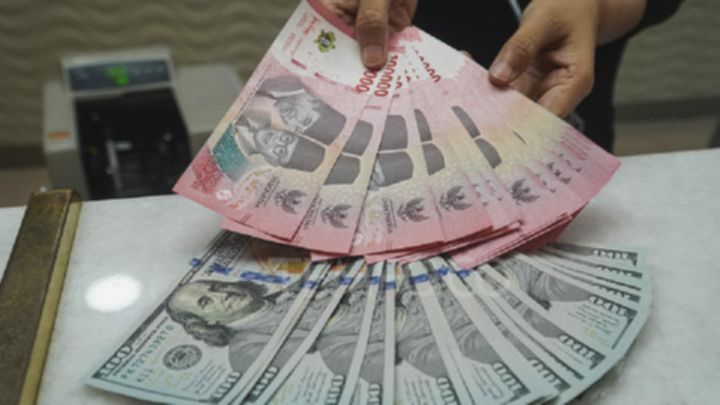

Indonesia’s rupiah continued its struggle against the US dollar on Tuesday afternoon, May 26, 2026, lingering above the critical Rp 17,700 per US dollar mark. Google data revealed a weakening trend, with the currency trading at Rp 17,792 per US dollar by 12:00 PM. Simultaneously, Bloomberg reported the spot rupiah at Rp 17,793 per US dollar, reflecting a 50-point depreciation.
The Indonesian currency’s vulnerability persists amid the dollar’s sustained strength. Ibrahim Assuabi, Director of PT Traze Andalan Futures, projects a continued depreciation for the rupiah, even through the upcoming national holiday. He attributes this outlook to the likelihood of significant external pressures.
With the Eid al-Adha celebration prompting a long domestic market holiday, Bank Indonesia’s capacity to intervene is limited. “Bank Indonesia cannot intervene in the domestic market, including bonds and state debt instruments; their intervention is restricted to the international market,” Assuabi explained on Tuesday, May 26, 2026. “This situation is expected to further weaken the rupiah.” According to Assuabi, the sharp decline observed this afternoon is primarily influenced by ongoing geopolitical instability in the Middle East and the concurrent surge in global oil prices. He grimly forecasts that the Indonesian currency could hit a new record low of Rp 18,000 per US dollar this week.
However, Bank Indonesia Governor Perry Warjiyo offers a contrasting, more optimistic view. He remains confident that the rupiah will reverse its downward trend and strengthen during the second half of 2026, following its recent slump. Warjiyo highlighted that this pattern aligns with historical movements observed whenever the rupiah faces significant pressure. “Based on our experience – and I don’t mean to boast, but I’ve lived through crises from 1997-1998, the 2008 global crisis, the taper tantrum, and COVID – exchange rate pressures generally lead to strengthening in July-August,” Perry remarked last week, drawing on decades of central banking experience.
The central bank chief emphasized that the rupiah’s current value is lower than its fundamental level, meaning it is undervalued. Perry bases this assessment on the State Budget’s (APBN) macro-economic assumptions, which target an average rupiah exchange rate of Rp 16,500 per US dollar, with an upper limit of Rp 16,800.
Perry expressed conviction in his ability to steer the rupiah back to these stronger levels. He attributes the currency’s present weakness to seasonal factors, particularly the heightened demand for foreign exchange (forex). “Typically, April, May, and June see significant demand for foreign currency, driven by Hajj pilgrims, dividend payments, and debt settlements,” he elaborated. Consequently, Perry anticipates a recovery and strengthening of the rupiah by July or August.
Editor’s Pick: Anxious Wait for Export Policy Impact
Summary
Indonesia’s rupiah significantly weakened against the US dollar on May 26, 2026, trading around Rp 17,792-17,793 per US dollar. An analyst forecasts continued depreciation, potentially reaching Rp 18,000, attributing this to geopolitical instability, rising global oil prices, and limited domestic intervention opportunities during national holidays.
Conversely, Bank Indonesia Governor Perry Warjiyo believes the rupiah is currently undervalued and expects it to strengthen in the second half of 2026, specifically by July or August. He attributes the current weakness to seasonal foreign exchange demand, citing historical trends of recovery after periods of pressure.