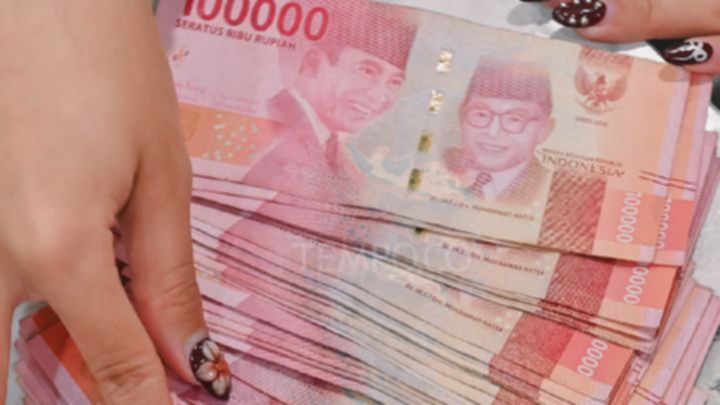

The Indonesian rupiah faced continued downward pressure during Friday’s trading session on May 29, 2026, hovering above the 17,880 mark against the US dollar. This decline marks a significant weakening compared to the previous week, with several commercial banks now quoting US dollar selling rates exceeding 18,000.
According to Bank Indonesia (BI) transaction data from Friday, the central bank set the reference selling rate for one US dollar at 17,877.94. However, international lenders have already surpassed this threshold. As of 09:01 WIB, Bank HSBC Indonesia set its selling rate at 18,060. Similarly, by 10:00 WIB, Bank DBS Indonesia and Bank UOB Indonesia reported selling rates of 18,048 and 18,053, respectively. Meanwhile, major domestic players—BCA, Bank Mandiri, BNI, and BRI—reported varied rates ranging from 17,800 to just above 17,900.
Fakhrul Fulvian, Chief Economist at Trimegah Sekuritas Indonesia, noted that the rupiah breaching the 17,800 level suggests that the market is searching for a new equilibrium point amidst intense global and domestic pressures. While he believes Bank Indonesia’s decision to raise interest rates to 5.25 percent is a necessary step to signal stability, he warns that monetary policy cannot operate in a vacuum.
“Without credible policy follow-up regarding fiscal measures and clear government communication, the risk of the rupiah sliding toward 18,000 per US dollar is very real,” Fakhrul stated on Friday, May 29, 2026. He emphasized that the government must immediately prioritize fiscal adjustments to prevent further depreciation.
According to Fakhrul, investors are looking beyond BI’s interest rate hikes; they are closely scrutinizing whether the government is prepared to safeguard the state budget (APBN) and maintain the balance of payments. He warned that if the currency continues to devalue toward the 18,000 level, the impact on consumers will be severe, manifesting in rising costs for imported goods, heightened inflationary pressure, and a subsequent decline in public purchasing power.
Ultimately, the government must adopt a balanced policy approach that bridges the real sector and the financial sector. Protecting the rupiah, he concluded, is not merely a financial market issue but a fundamental pillar for maintaining the stability of the national economy.
Editor’s Choice: Business Perspectives on a Persistently Weak Rupiah
Summary
The Indonesian rupiah experienced significant downward pressure on May 29, 2026, as several commercial banks reported selling rates exceeding 18,000 per US dollar. Although Bank Indonesia set its reference rate at 17,877.94, international lenders such as HSBC, DBS, and UOB pushed their rates beyond the 18,000 threshold. Major domestic banks reported slightly lower rates, but the overall market sentiment remains focused on finding a new equilibrium amidst ongoing economic volatility.
Economists warn that while recent interest rate hikes provide some stability, monetary policy alone is insufficient to prevent further depreciation. There is an urgent call for the government to implement credible fiscal adjustments and clear communication to protect the state budget and maintain investor confidence. Failure to address these concerns risks higher inflation and decreased public purchasing power, highlighting the need for a comprehensive policy approach to secure the national economy.