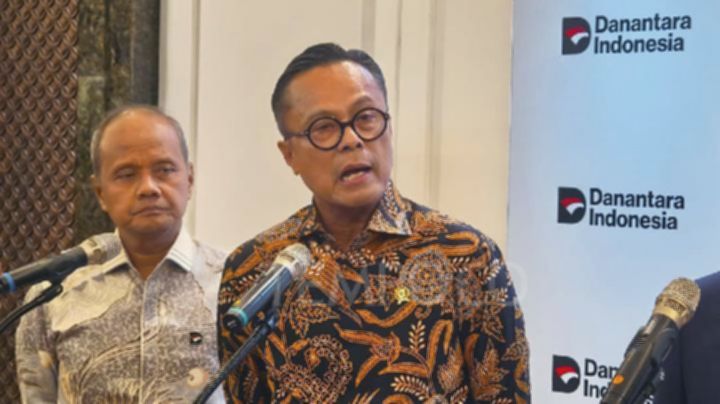

Dony Oskaria, who serves as both the Head of the State-Owned Enterprise Regulatory Agency (BP BUMN) and Chief Operating Officer (COO) of Danantara, has confirmed that an assessment is currently underway regarding the potential closure of PT Industri Telekomunikasi Indonesia (INTI). Crucially, Oskaria has provided a firm guarantee that this strategic reevaluation will not result in any employee layoffs, emphasizing a steadfast commitment to workforce security.
Speaking from the Parliament Complex in Senayan, Jakarta, on Monday, May 25, 2026, Oskaria informed reporters, as quoted by Antara, “An assessment is currently being conducted [for the closure of PT INTI]. It is being thoroughly checked.” He linked this initiative to broader efforts to “streamline” operations across state-owned enterprises, signaling a deliberate move towards greater efficiency.
During the same discussion, Oskaria elaborated that Danantara is actively involved in a verification process for PT INTI. He reiterated his unwavering assurance, affirming that no employment terminations will affect the company’s workforce. This commitment underscores a key principle guiding the broader BUMN transformation agenda.
Oskaria firmly upholds the principle that the ongoing restructuring of state-owned enterprises should not lead to job losses for employees within the affected companies. “Our workers are secure. As we have consistently stated, there will be no layoffs,” Oskaria asserted, reinforcing the protective stance towards labor.
In a collaborative effort, BP BUMN and the Ministry of Manpower are actively fostering enhanced synergy through a strategic cooperation plan. This initiative is designed to ensure that the comprehensive BUMN transformation process adheres strictly to the principle of “no one left behind,” thereby guaranteeing that employee rights remain fully protected and uncompromised.
This crucial synergy between BP BUMN and the Ministry of Manpower is integral to fostering a healthy, professional, and sustainable trajectory for the BUMN transformation. It explicitly prioritizes the welfare and protection of all personnel within these enterprises, ensuring a human-centric approach to corporate evolution.
Both BP BUMN and Danantara have unequivocally affirmed their joint commitment to the BUMN transformation. They stress that this ambitious undertaking is not solely about bolstering corporate performance but also, critically, about providing robust protection and unwavering certainty for all employees involved.
Earlier in mid-May 2026, Oskaria had disclosed significant progress in the broader BUMN transformation agenda, revealing that 180 companies operating under the state-owned umbrella had already undergone restructuring. This extensive initiative aims to enhance effectiveness and efficiency, ensuring that each enterprise remains sharply focused on its core business lines.
This comprehensive restructuring forms an essential component of a larger strategic transformation. Its objectives include simplifying corporate structures, mitigating business overlaps, and meticulously defining clear roles for each entity. The ultimate goal is to optimize their capacity for generating economic value and to robustly support the enhancement of national competitiveness.
Editor’s Choice: Anticipating the Impact of Export Policies
Summary
Dony Oskaria, the Head of BP BUMN and COO of Danantara, has confirmed a strategic assessment regarding the potential closure of PT Industri Telekomunikasi Indonesia (INTI) to streamline state-owned operations. Despite the evaluation, Oskaria provided a firm guarantee that the restructuring will not result in any employee layoffs. This initiative aims to enhance operational efficiency and focus on core business lines while ensuring workforce security remains a top priority.
BP BUMN is collaborating with the Ministry of Manpower to ensure that the ongoing transformation protects employee rights and follows a human-centric approach. This effort is part of a broader restructuring plan that has already impacted 180 state-owned companies to reduce business overlaps and simplify corporate structures. The ultimate goal is to optimize economic value and national competitiveness without compromising the welfare of the personnel involved.