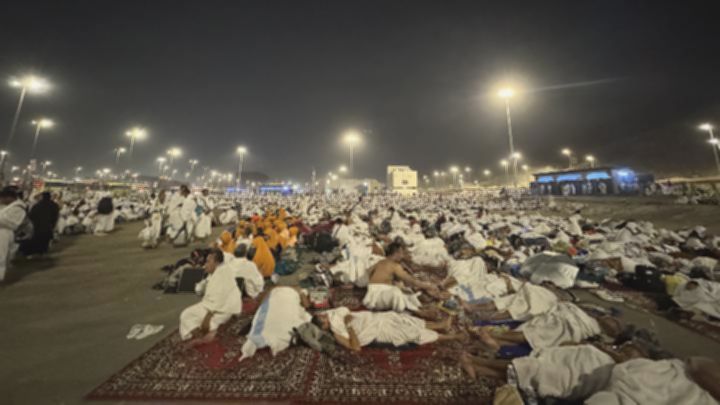

The Ministry of Hajj and Umrah has addressed reports concerning Indonesian pilgrims from Bangkalan, East Java, who faced delays in receiving their meals while staying in Mina, Saudi Arabia. The incident, which affected members of the SUB-72 flight group, sparked concerns regarding the reliability of food distribution services during the Hajj pilgrimage.
Editor’s Choice: Why Reducing the Free Nutritious Meal Program May Lack Efficiency
Ichsan Marsha, spokesperson for the Ministry of Hajj and Umrah, confirmed that the disruption occurred on May 27, 2026, the first day of the pilgrims’ arrival in Mina. An internal investigation revealed that the issue stemmed from a breakdown in communication and procedural adherence between the catering company, known as the syarikah, and the designated food supervisors at Markaz 71.
According to a written statement released on May 30, 2026, the syarikah reportedly deposited the meals in a central hallway without notifying the authorized personnel. Because the food was dropped off without the mandatory receipt documentation, supervisors were unable to track which groups had already been served, leading to significant confusion and delays.
To rectify the situation, food supervision officers were forced to conduct a manual sweep of every tent to ensure no pilgrim was left without a meal. This labor-intensive verification process lasted throughout the day, as officials worked diligently to account for each group until every pilgrim had received their food by late afternoon.
The Ministry emphasized that this was not a shortage of supplies, but rather a lapse in logistics. Ichsan reiterated that the food was available, but the failure to follow established handover protocols meant that some meals were effectively unregistered.
“The officers had to check each tent individually to guarantee that every pilgrim received their allocated meal,” Ichsan explained. Following the incident, the Ministry has coordinated with the catering provider to conduct a thorough evaluation of their distribution methods. The goal is to enforce stricter compliance, including mandatory real-time notification to supervisors and clear, documented handovers for all future services.
“We have instructed the syarikah to ensure all distributions strictly follow protocol. Accurate monitoring is vital to ensure that the rights of the pilgrims are respected and that services are provided in a timely manner,” he added.
The Ministry of Hajj and Umrah concluded by commending the field officers for their swift response. Their proactive efforts in verifying the status of the distribution and organizing a secondary delivery ensured that the affected pilgrims ultimately received their services despite the initial procedural failure.
Editor’s Choice: The Purpose Behind Prabowo’s Frequent Visits to France
Summary
Indonesian pilgrims from Bangkalan, East Java, experienced food distribution delays while staying in Mina due to a breakdown in communication between the catering company and local supervisors. The Ministry of Hajj and Umrah clarified that the incident was caused by a procedural failure where meals were left in a hallway without the required documentation, rather than a shortage of supplies. Officials addressed the issue by conducting a manual sweep of tents to ensure every pilgrim received their food by late afternoon.
To prevent future occurrences, the Ministry has mandated stricter compliance from the catering provider regarding real-time notifications and documented handover protocols. Field officers were commended for their proactive response in verifying distribution and resolving the logistical lapse. Moving forward, the Ministry aims to improve service accountability to ensure all pilgrims receive their allocated meals in a timely manner.