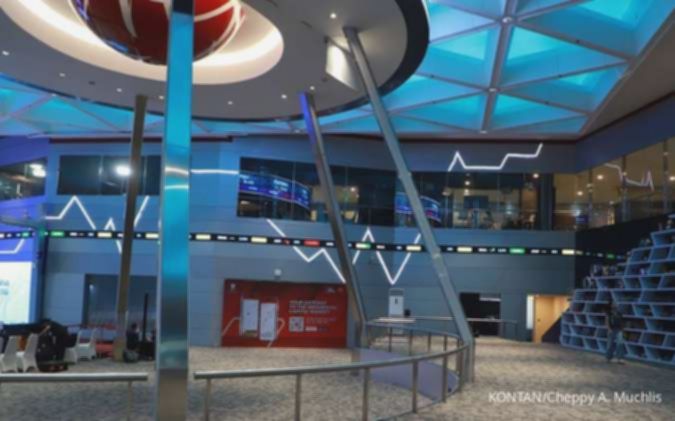

KONTAN.CO.ID – JAKARTA. The movement of the Jakarta Composite Index (IHSG) on the final trading day of May 2026 is still anticipated to be marked by limited volatility. This comes as investors brace for the effective date of the MSCI index rebalancing in early June, a crucial event that often influences market dynamics.
Muhammad Wafi, Head of Research at KISI Sekuritas, noted that the pressure stemming from the MSCI rebalancing has, in fact, been gradually distributed since mid-May. This proactive adjustment by fund managers has helped mitigate a potential bottleneck of selling pressure.
“Today, the majority of fund managers have been making phased adjustments since May 12, ensuring that the pressure does not accumulate all at once,” Wafi explained to Kontan on Friday, May 29, 2026. This staggered approach is a key factor in preventing more significant market swings.
Given this distributed pressure, Wafi foresees the potential for market stabilization to emerge as early as next week, once the mechanical impact of the rebalancing subsides. This suggests a more predictable trading environment on the horizon for investors.
IHSG Potentially Volatile in Late May, Fundamental Sentiments More Dominant
Elaborating on his outlook, Wafi reiterated, “Next week, the mechanical pressure from MSCI will conclude, opening up the potential for stabilization.” This indicates a shift from technical rebalancing-driven movements to a market more influenced by underlying fundamentals.
From a technical perspective, Wafi projects the IHSG to trade within a narrow range. He identifies a support level between 6,050 and 6,100, with resistance expected around the 6,300 mark. Investors should monitor these levels closely for potential breakout or breakdown signals.
Beyond technical indicators, investors are advised to closely monitor several external and domestic factors that could significantly impact market direction. These broader sentiments often dictate the overall appetite for risk and investment flows.
Wafi highlighted, “The remaining execution of the rebalancing, escalating geopolitical tensions in the Middle East, uncertainties surrounding DSI policies, and the FTSE review – set to be effective on June 22 – are all factors that warrant vigilance.” These combined elements could introduce renewed volatility if not carefully managed.
Regarding investment strategy amidst this period of transition, Wafi strongly advises against rushing into new positions. Instead, he recommends a patient approach, encouraging investors to wait for more stable market conditions to emerge.
“Wait for two to three days, then gradually accumulate fundamentally strong stocks that are already oversold,” he suggested. This strategy aims to capitalize on undervalued assets once the market noise settles down.
Furthermore, investors are cautioned to steer clear of high speculative counter (HSC) stocks in the current fluctuating market environment. Focusing on quality assets is paramount for navigating uncertainty.
Wafi further emphasized the importance of selective stock picking, recommending a focus on issuers with a free float above 15%, clear and visible earnings, and a high dividend yield. These characteristics often point to more resilient and fundamentally sound companies.
Several stocks continue to appear attractive for close observation. Among them are major banking stocks like BBCA and BMRI, which are considered oversold with relatively appealing price-to-book value (PBV) valuations. Additionally, commodity-based stocks such as AADI and PTBA are also deemed compelling, supported by high dividend yields and consistent foreign fund inflows.
In the precious metals sector, ANTM and BRMS stand out as favorable options, buoyed by the sustained strength of global gold prices. Meanwhile, defensive consumer stocks like INDF and ICBP also merit consideration for their stability during uncertain times.
Conversely, for stocks such as BREN and TPIA, Wafi acknowledges their strong fundamentals. However, he advises that any accumulation should be highly selective and ideally undertaken after the pressure from the FTSE review subsides towards the end of June.
WTI Oil Prices Drop 8.78% in a Week, Market Welcomes Positive US-Iran Ceasefire Developments
Summary
The Jakarta Composite Index (IHSG) is anticipated to experience limited volatility as investors prepare for the MSCI index rebalancing, effective in early June. According to Muhammad Wafi, Head of Research at KISI Sekuritas, fund managers have proactively distributed the rebalancing pressure since mid-May, mitigating a potential bottleneck of selling. This staggered approach suggests market stabilization could emerge as early as next week once the mechanical impact subsides.
Following the conclusion of MSCI’s mechanical pressure, the market is expected to shift towards being more influenced by fundamental sentiments. Investors are advised to monitor external factors, including geopolitical tensions and the upcoming FTSE review, and exercise patience before making new investments. Wafi recommends accumulating fundamentally strong, oversold stocks with a free float above 15%, clear earnings, and a high dividend yield, highlighting major banking, commodity, and defensive consumer stocks.