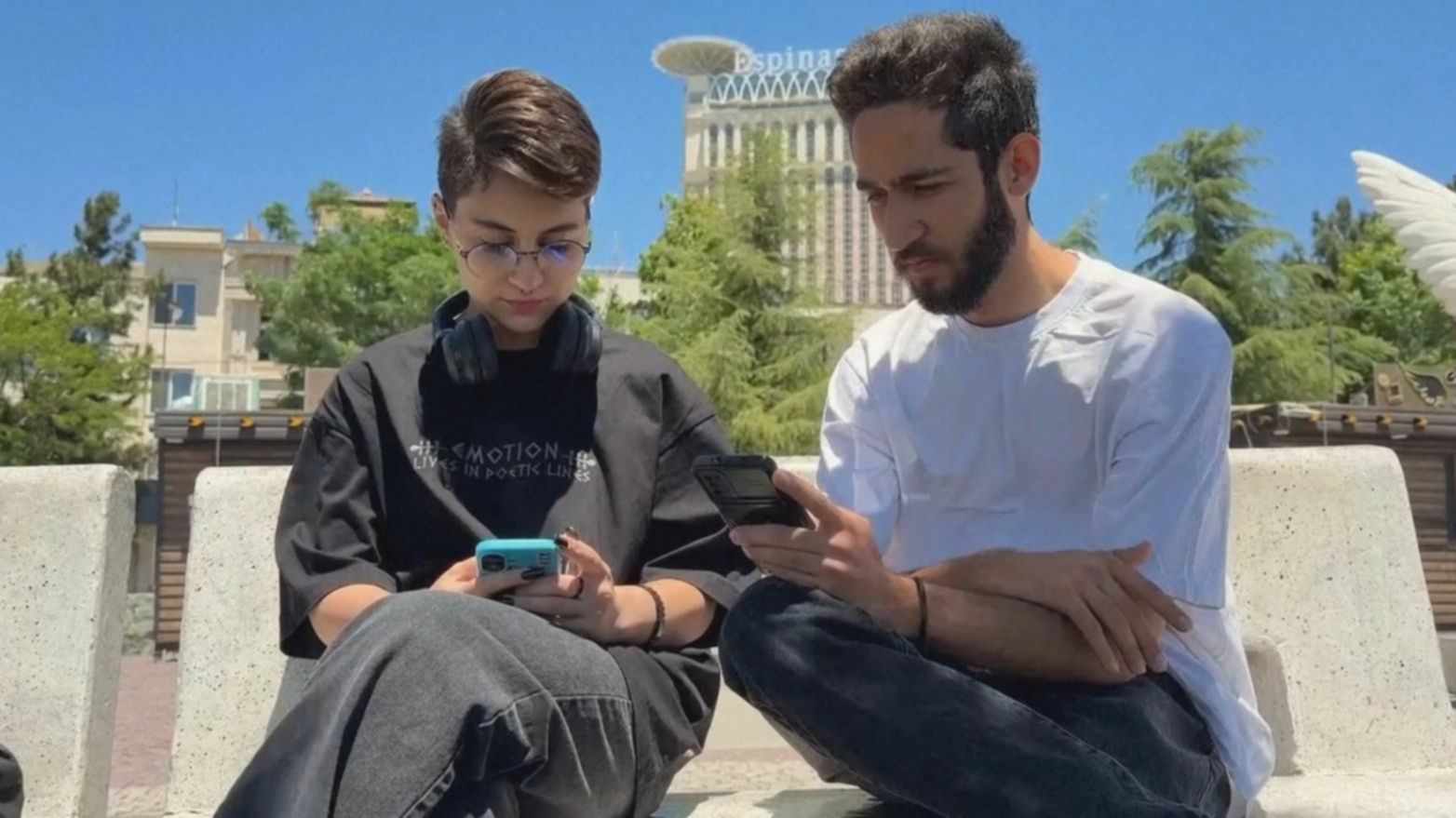

“After 88 days, it feels exactly like a prisoner released after three months in jail and seeing the sky for the first time.”
This powerful sentiment captures the emotion of an Iranian citizen describing their profound relief upon reconnecting to the internet. Their government recently ended what a monitoring group termed the longest national internet shutdown in modern history, a period of digital silence that lasted nearly three months.
“You might not believe it, but when I clicked on a site and saw it open, I felt as if I could fly from happiness,” the individual recounted to the BBC’s Middle East Daily program. “And when I realized I could once again send messages via Telegram, WhatsApp, and other platforms, it was an indescribable feeling. Even now, as I speak, I’m almost in tears of joy.”
The first notifications on their phone, a cascade of updates for a long list of applications, further overwhelmed them with emotion, marking a poignant end to a challenging period.
While a wave of relief sweeps across Iran with the partial restoration of connectivity, it is accompanied by lingering anxieties over escalating censorship in a nation already notorious for its stringent internet restrictions and surveillance practices.
-
Read also: US again attacks targets in Iran for the second time in three days
The Iranian government had severed internet access following the outbreak of a conflict with the US and Israel on February 28. Officials cited the measure as a necessary step to counteract surveillance, espionage, and potential cyberattacks during the hostilities.
First Vice President Mohammad Reza Aref announced on X on Tuesday that the government had taken “initial steps” toward “free and managed” internet access, acting on directives from President Masoud Pezeshkian. He attributed the reopening of the internet to the recovery of digital services and the necessity of fulfilling the needs of citizens who “continue to support the system and Iran,” further emphasizing its critical role in scientific advancement and the technology-driven economy.
Another Iranian citizen shared with Middle East Daily that despite some users still lacking full access and several platforms remaining blocked, “the very fact that the internet has returned is cause for celebration.” The three months of internet blackout were described as “very difficult,” causing immense distress from the inability to contact family and friends outside Iran.
“We knew, especially during the war, they were extremely worried, but we couldn’t even reassure them that we were safe,” the citizen lamented, highlighting the profound personal impact of the digital isolation.

For those whose livelihoods hinge on online activities, the ability to reconnect with the websites and applications they relied on before the conflict has brought immense relief. Pantea, a computer science student, expressed her delight to the Associated Press: “I’m so happy the internet will be restored because businesses can get back to normal.”
“I used to have an online shop and sold products. This will definitely benefit us,” she explained. “But the only problem is censorship. If they find a proper solution for this, many issues will be resolved.”
-
Read also: ‘You are no longer my brother’ – When war divides families in Iran
-
Read also: ‘I haven’t slept for days’ – The story of an Iranian citizen one month after the US-Israel attacks began
-
Read also: ‘Even under missile bombardment, we still live life’ – Stories of young Iranians facing war
Rastin, also a computer science student, echoed this sentiment to the AP, calling the end of the shutdown “entirely positive.” He noted that “the online market is eager to return to its previous state,” but cautioned that “the ongoing social pressure is very detrimental to online businesses. Businesses heavily depend on the internet, and every time there are restrictions, it makes their lives more difficult.”
Internet blackouts are not unfamiliar in Iran; access was also cut during nationwide anti-government protests in January that were brutally suppressed by security forces. Many Iranians have long resorted to costly virtual private networks (VPNs) or the clandestine smuggling of satellite internet devices into the country to circumvent these persistent restrictions.
Internet monitoring group NetBlocks observed that as connectivity began to return, there were signs of “wider filtering” compared to what they witnessed during the January crackdown. On Wednesday, the group stated, “Services are still experiencing stringent filtering, with new restrictions on messaging services and app stores compared to before January. Calls for a free and open internet transcend political differences and ought to be heard.”
-
Read also: ‘My body is trembling from stress’ – The psychological toll of war in Iran
-
Read also: Living costs rise due to US-Iran war, these companies make trillions in profit
Since connections started to be restored, Proton VPN reported an astounding surge in sign-ups, increasing by up to 6,000%.
However, the return to normalcy is far from universal. Several individuals who contacted BBC Persia reported that while their home internet connections were restored, mobile data services on their phones remained non-functional. Others claimed they had received no service at all and were still relying on older methods as of Tuesday.
A 17-year-old in Tehran starkly articulated the widespread frustration: “We are truly exhausted. With high prices, with sanctions, with weak internet. Everything is getting worse. I can’t live like this anymore.”
While the profound sense of relief is most palpable within Iran, the return of internet connectivity has also been welcomed by citizens living abroad, who can now, in many cases, resume contact with their family members. Shaparak Khorsandi, an Iranian-born British comedian and writer, described the experience of hearing others reconnect with loved ones as “painful and joyful” on BBC Radio 4’s Today program, as she herself had not yet managed to reach her aunt in Iran.
“It feels like a very familiar experience for Iranians—disconnected, filled with worry, panic, and feeling helpless. So it’s been a difficult time, but we keep trying,” she shared. “For those of us abroad, it feels like… a strange, isolated experience, because your life feels like it’s on hold—you can’t really move forward, but you still have to go about your day.”
She recounted a particularly poignant message her uncle managed to send from Iran during the shutdown—a birthday wish to himself on behalf of the family. “One of my uncles wrote to us, ‘Today is my birthday, and I know you can’t contact me to wish me well, so I’m sending this message to wish myself a happy birthday on your behalf,'” she recalled. Khorsandi described her uncle’s humor as “very loving,” a testament to his effort to prevent his family from worrying.
With an emotional voice, she expressed her primary desire: to convey to her family in Iran that “we love them and hope no silence whatsoever stops them from feeling that.”
-
Warga Iran lelah dengan ekonomi memburuk dan bayang-bayang perang – ‘Orang harus bayar tiga kali lipat demi sepotong roti’
-
‘Tubuh saya gemetar karena stres’ – Tekanan psikologis akibat perang di Iran
-
‘Kau bukan lagi saudaraku’ – Ketika perang memecah belah keluarga di Iran
Summary
Iranians are experiencing profound relief following the end of an 88-day national internet shutdown, the longest in the nation’s modern history. The blackout, which the government implemented on February 28 citing security concerns during conflicts with the U.S. and Israel, caused significant distress and economic disruption. While many citizens are now celebrating the restoration of digital services, connectivity remains partial, and numerous platforms continue to face strict filtering.
Although the government claims it is moving toward a “free and managed” internet to support economic and scientific growth, concerns regarding ongoing surveillance and censorship persist. Many users still struggle with limited access, and observers note that current restrictions on messaging services and apps are even more stringent than before. Despite these challenges, the ability to reconnect with loved ones and resume online business activities remains a critical, albeit uncertain, improvement for the population.