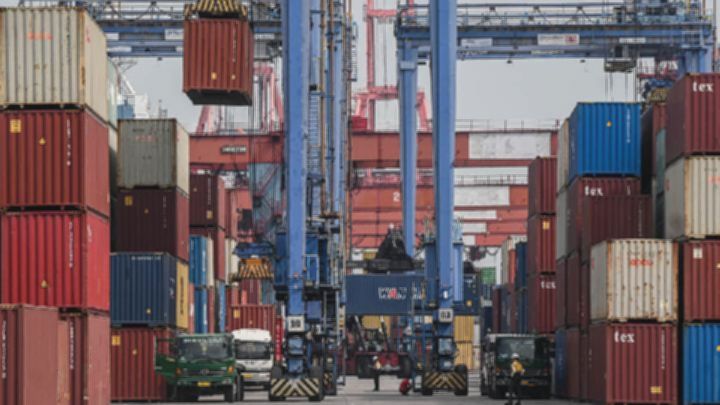

PT Pelabuhan Indonesia (Persero), commonly known as Pelindo, has reported a robust performance in container traffic, reaching 6.42 million Twenty-foot Equivalent Units (TEUs) from January to April 2026. This significant achievement marks a 7 percent increase compared to the 5.99 million TEUs recorded during the same period in the previous year, underscoring the company’s continuous growth trajectory in Indonesia’s vital maritime sector.
According to Pelindo’s President Director, Achmad Muchtasyar, this impressive surge in container traffic is primarily bolstered by dynamic export and import activities. In a written statement released on Friday, May 29, 2026, Muchtasyar highlighted that the international segment played a pivotal role, expanding by approximately 11 percent. Within this segment, exports witnessed a commendable 10 percent growth, while imports saw an even higher increase of 12 percent, reflecting strong engagement with global markets.
Beyond international trade, domestic container traffic also demonstrated healthy growth, with an overall increase of 4 percent. This was supported by a 5 percent rise in unloading activities and a 4 percent climb in loading operations. The consistent strength of inter-island goods distribution remains crucial, actively supporting national consumption and regional economic activities, complementing Indonesia’s robust foreign trade endeavors.
Muchtasyar further elaborated on the strategic positioning of Indonesia’s national trade distribution, noting that the regions of China and Southeast Asia collectively account for approximately 46.2 percent of Indonesia’s exports and 56.5 percent of its imports. This well-integrated trade structure provides a substantial buffer for Indonesia, as the majority of goods movement occurs within a region characterized by strong, stable, and mutually beneficial trade relationships.
The notable increase in both export and import flows serves as a testament to the resilience of Indonesian trade amidst prevailing global uncertainties. Muchtasyar pointed out that this resilience is particularly significant given complex geopolitical dynamics in the Middle East and the economic slowdowns observed in various countries worldwide, showcasing Indonesia’s ability to navigate challenging international landscapes.
Statistical data from the Central Statistics Agency (BPS) corroborates this positive trend, showing substantial growth across key container-based export commodities. Notable increases include animal/vegetable fats and oils, which grew by 7.95 percent; mechanical machinery and equipment, up by 9.26 percent; electrical machinery and equipment, rising by 4.9 percent; and various chemical products, soaring by 12.27 percent, indicating diverse and robust export performance.
On the import front, significant growth was predominantly observed in specific categories. Mechanical machinery and equipment imports surged by 22.1 percent, while electrical machinery and equipment saw a 17.91 percent increase. Optical instruments experienced a 20.8 percent rise, and various chemical products recorded an outstanding 36.31 percent growth, underscoring strong demand for industrial inputs and technological goods.
Muchtasyar emphasized that the widespread growth in container traffic is also evident at several key ports that facilitate national export and import activities. These include Tanjung Priok in Jakarta, Tanjung Emas in Semarang, and Tanjung Perak in Surabaya. “The continuous loading and unloading activities at these major ports clearly demonstrate that the national supply chain and trade distribution network remain highly active and efficient,” he stated.
Focusing on domestic movements, Tanjung Priok Port recorded an impressive 8 percent growth in domestic traffic, largely driven by increased container shipments to ports in eastern Indonesia. Concurrently, Tanjung Perak Port saw a 2 percent expansion, fueled by enhanced services connecting to Makassar, Kendari, and Berau. Makassar Port itself achieved a 7 percent growth, significantly boosted by the movement of agricultural commodities such as rice, corn, and secondary crops, reflecting the escalating economic activity in South Sulawesi and its surrounding regions.
Editor’s Choice: Root Causes of Port Governance Problems According to BPK
Summary
PT Pelabuhan Indonesia (Pelindo) reported a 7 percent growth in container traffic from January to April 2026, reaching a total of 6.42 million TEUs. This surge was primarily driven by an 11 percent increase in international trade, where exports grew by 10 percent and imports by 12 percent. Domestic traffic also experienced a healthy 4 percent rise, reflecting robust inter-island distribution and stable national economic activity.
The growth was supported by strong demand for commodities such as mechanical machinery, chemicals, and vegetable oils, particularly within the China and Southeast Asian markets. Major ports including Tanjung Priok and Tanjung Perak recorded significant activity, showcasing a resilient and efficient national supply chain. These results highlight Indonesia’s ability to maintain a positive trade trajectory despite global economic uncertainties and geopolitical pressures.