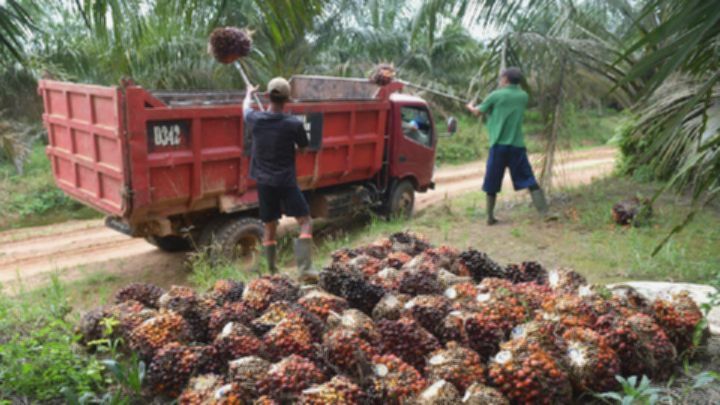
Deputy Minister of Agriculture, Sudaryono, has unequivocally stated that PT Danantara Sumberdaya Indonesia (DSI) will not derive any profit from its role in managing the crude palm oil (CPO) export policy under the new one-door scheme. “I reiterate, it will not take any profit,” Sudaryono affirmed, as quoted by Antara on Friday, May 29, 2026. This clear declaration aims to dispel any misconceptions surrounding DSI’s operational model.
Sudaryono further elaborated that the government’s policy mandates the integrated management of exports for strategic commodities, including coal, palm oil, and ferro alloy, all channeled through PT Danantara Sumberdaya Indonesia (DSI). To guarantee utmost transparency and accountability in export operations, the government has engaged in extensive coordination with various stakeholders, including DSI itself. This unified approach is designed to streamline trade processes and enhance oversight.
PT DSI is poised to assume a crucial role as the managing and supervisory entity within the governance framework for these vital national strategic commodity exports. Its primary objective is to foster a more orderly and efficient trading mechanism. Sudaryono expressed his hope that this new structure would alleviate concerns among downstream palm oil industry players, particularly refiners and active exporters, who have been integral to the nation’s export trade.
Explaining the phased implementation, Sudaryono detailed a three-month transition period, commencing on June 1 and concluding on August 31, 2026. During this critical interim, the government will meticulously establish various regulatory stages, ensuring a gradual and seamless transfer of palm oil company exports to the mechanism managed by PT DSI. This measured approach is intended to facilitate a smooth adaptation for all involved parties.
The government’s overarching goal is to achieve full national integrated management of palm oil, coal, and iron commodity exports through PT DSI by January 1, 2027. Initially, DSI will operate under an “agent business” or intermediary model, facilitating transactions between sellers and buyers. This foundational role will then evolve, with DSI developing additional functions in line with its expanding human resources capacity and operational maturity.
The operationalization of Danantara Sumberdaya Indonesia will unfold in two distinct stages. The first stage, spanning from June 1 to December 31, 2026, will see DSI functioning primarily as an assessor and intermediary, bridging the gap between sellers and buyers of specific export commodities. This initial phase is crucial for establishing foundational trust and operational protocols.
Entering the second stage, which is targeted to commence in January 2027, DSI will expand its mandate significantly. In this advanced phase, the company will directly purchase commodities from domestic exporters before subsequently selling them to the international market. This evolution signifies DSI’s enhanced role in managing the entire export value chain for these strategic resources.
Pilihan Editor: Siapa Merugi Akibat Blackout Listrik Sumatera
Summary
Deputy Minister of Agriculture, Sudaryono, has clarified that PT Danantara Sumberdaya Indonesia (DSI) will not profit from managing the new one-door export policy for strategic commodities, including palm oil, coal, and ferro alloys. This initiative aims to streamline trade processes and enhance transparency through an integrated management framework. By acting as an intermediary, DSI seeks to foster a more efficient trading mechanism while alleviating concerns among industry players.
The transition to this new system will occur in phases, starting with a three-month adjustment period beginning June 1, 2026. Initially, DSI will operate as an agent facilitating transactions between buyers and sellers, with a full transition to a direct purchasing model planned for January 2027. This measured approach is designed to ensure a seamless adaptation as the government works toward complete integrated management of these national strategic exports.